

Consider Ade, who runs a POS stand at the entrance of Yaba market.
By Wednesday afternoon of a recent week in mid-2026, he had recharged his mobile data three times, paid N105 ($0.08) in electronic transfer charges across four customer transactions, waited eleven minutes for a network signal strong enough to complete a transfer, and resolved to end the day with a cold bottle of lager, a small consolation against the particular exhaustion of earning less than the day before whilst paying more than the day before for the tools that kept his earning.
He did not know, as he drank, that the company that brewed beer had just posted a 9% jump in half-year revenue.
He had not seen the headline informing Nigerians that data provider had grown its half-year profit by more than 70% to N707.5 billion ($505 million), on the back of a tariff increase that had roughly doubled the price of one gigabyte less than two years earlier.
Also Read
And he was, in all probability, entirely unaware that Nigeria’s eleven of the thirteen listed banks had earned a combined N984.47 billion ($703 million) from fees and commissions in the first quarter of 2026 alone, off the very USSD rails he used eleven times that day.
Had he known all of it, his first response would not have been national pride. It would have been a question the financial press has thus far declined to ask on his behalf: where exactly did all of that money come from?
This article argues that the answer is discomfiting. It came, in significant part, from Ade, and from millions like him. Nigeria has developed a habit of reading corporate revenue declarations as evidence of prosperity, when they are often evidence of price extraction and economic stress. Corporate revenue is price multiplied by volume.
When price rises faster than volume in an environment of stagnant household incomes, the revenue gain is purchased from constrained budgets, not generated by expanding wealth. The three sectors examined here, brewing, telecommunications, and banking, each illustrate a different variant of the same mechanism. Declaring such gains as national prosperity is a misreading of the instruments with serious policy consequences.
The brewery sector, that produced 17.7 million hectolitres of beer in 2024, maintaining its position as Africa’s second-largest producer (behind South Africa), provides the sharpest illustration. Nigerian Breweries Plc reported N1.5 trillion (about $1.0 billion) in group revenue for its 2025 financial year, a 35% increase from N1.1 trillion (about $733 million) in 2024.
The sector as a whole posted revenue growth of 79.5% year-on-year in 2024, according to Agusto & Co. That pace has since moderated but not reversed: half-year 2026 revenue reached ₦804 billion ($574 million), up 9% on the same period of 2025, with pre-tax profit rising a faster 18%.
Yet beer consumption volume in Nigeria is projected to decline from 1.73 million metric tons in 2023 to 1.45 million metric tons by 2028, an average annual contraction of 2.8% per IndexBox data. The arithmetic is unambiguous: if revenue rises 80% while volume does not rise correspondingly, the explanation is price.
The consumer is paying more for the same or fewer bottles. The goat that grows fat in a lean compound has found a way to eat before the family wakes up.
And for the segment of the population that drinks to manage stress, in a country where fewer than 300 psychiatrists serve over 230 million people and where economic hardship, occupational stress, and the particular desperation of people are documented as a driver of alcohol consumption, rising brewery revenue in a period of falling real incomes is not a prosperity signal. It is a price increase imposed on a coping mechanism.
The telecommunications sector makes the same argument without ambiguity. In January 2025, the NCC approved a 50% tariff adjustment, ending a 12-year freeze. The average price of one gigabyte of data roughly doubled, from approximately N287.50 ($0.19) to N575 ($0.38).
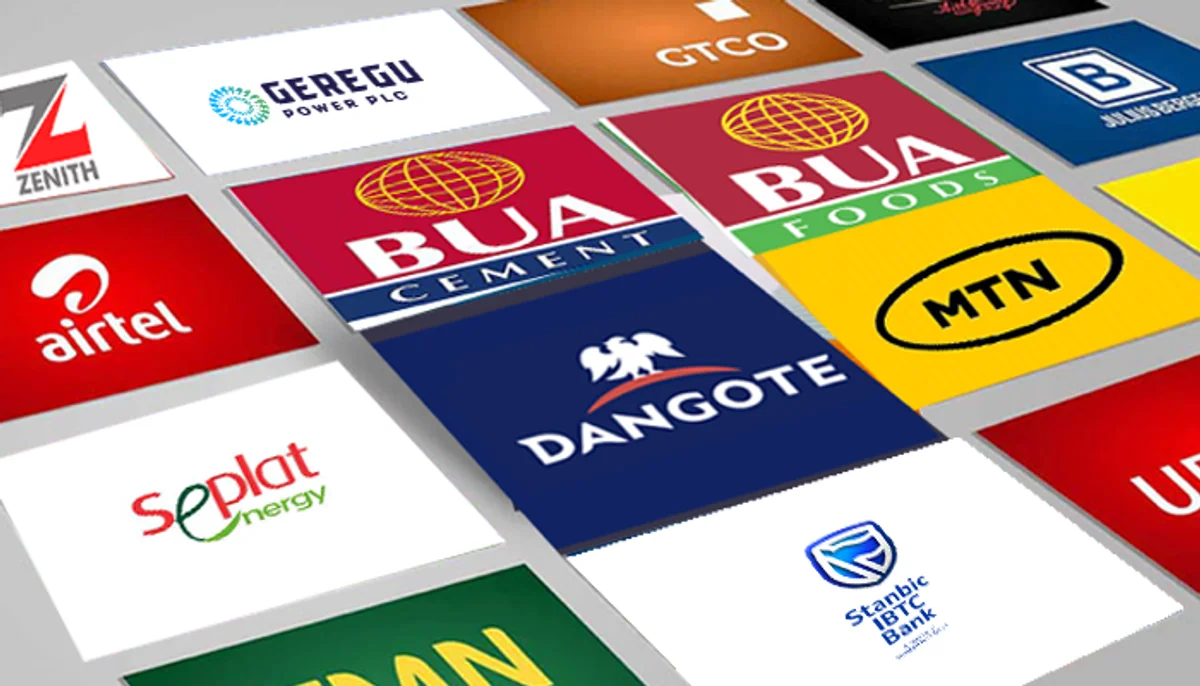
MTN Nigeria’s full-year revenue reached N5.2 trillion in 2025, up from N3.35 trillion in 2024, with profit after tax of N1.1 trillion. That growth has since accelerated: in the first half of 2026, MTN Nigeria’s revenue rose 25.9% year-on-year to N2.99 trillion, with profit after tax up 70.6% to N707.5 billion.
Airtel Africa’s Nigerian operations grew reported-currency revenue by 52.9% to $1.6 billion in the financial year ended March 2026, with data revenue surging 69.8%. These gains were real. But so was the mechanism. Mobile data in Nigeria is no longer a luxury.
The 153.8 million active internet subscriptions tracked by the NCC as of March 2026 probably include POS operators processing transactions for communities with no bank branches; artisans and mechanics whose client relationships exist entirely on messaging platforms; bus drivers who coordinate routes through mobile data; market women receiving payment confirmations in real time.
For these users, a doubled data price does not reduce consumption; it displaces food, medicine, school fees, and savings. The telecom company books a record profit. The household absorbs a silent tax.
The banking sector follows a related but more complicated logic. Zenith Bank’s profit after tax grew 52.6% in 2024 to N1.03 trillion ($687 million), then flattened to N1.04 trillion ($694 million) in 2025 as one-off currency gains faded.
Guaranty Trust Holding Company’s profit after tax fell 14.94% in 2025 to N865.75 billion ($577 million), and UBA’s profit after tax collapsed 47% to N404.7 billion ($270 million) as a trading gain reversed into a loss and loan-loss provisions climbed.
Yet the underlying fee-generating machinery kept expanding throughout: GTCO’s core fee income rose 25.88% even as its bottom line fell, and eleven out of thirteen Nigeria’s listed banks together earned N984.47 billion ($703 million) in fees and commissions in the first quarter of 2026 alone, up 13.64% year-on-year, of which ₦224.69 billion came from ATM and electronic banking charges and N209.18 billion from account maintenance fees.
Consumer complaints against financial institutions rose 11 percent in 2025, reaching 23,129 cases, prompting the CBN to order N19.12 billion and $329.3 million in refunds. The regulator’s 2026 Guide to Charges, effective from May, has since eliminated card maintenance fees and made small transfers of up to N5,000 free, a genuine concession that arrived only after years of fee income outpacing customer incomes.
When a bank earns a fee on a transfer, it is counted as income. When the sender absorbs the fee, his effective income falls. Aggregated across millions of transactions, the banking sector’s fee income is simultaneously a household-sector expense that the macro headline does not count.
There is a further complication: every figure above is nominal, unadjusted for the Naira’s loss of purchasing power. Nigeria’s real GDP grew 3.87% in 2025 and 3.89% year-on-year in the first quarter of 2026, according to the NBS, a pace every corporate growth rate cited here has vastly outrun on a nominal basis. But that comparison flatters the corporate side, since it sets a nominal figure against a real one.
Deflated by that year’s roughly 23 percent average inflation rate, Nigerian Breweries’ 35.3% nominal revenue growth in 2025 becomes real growth of around 10%, and its roughly 9% half-year 2026 growth, set against roughly 15% inflation over the same months, becomes a real-terms contraction of approximately 5%.
Telecommunications survives the adjustment comfortably: MTN’s 2025 revenue growth still clears roughly 26% in real terms, and its half-year 2026 profit growth, deflated, still exceeds 48%, several multiples of GDP growth.
Banking splits the difference. Zenith Bank’s profit, once deflated, fell by approximately 18% in real terms in 2025, GTCO’s by roughly 31%, and UBA’s by nearly 57%, even as the fee income households actually pay barely kept pace with inflation, growing by little more than negative 1% in real terms in the first quarter of 2026. The pattern varies by sector, but none of it resembles genuine prosperity.
None of this means corporate profits are inherently harmful or that revenue growth is meaningless. The digital infrastructure serving 153.8 million internet subscriptions, the banking sector processing transactions for the previously unserved, the brewery sector employing thousands along its value chain, these are genuine contributions.
The argument is that they should be counted accurately, which means counting what was also lost, displaced, and extracted. Nigeria’s headline inflation reached 34.80% in December 2024 before the NBS rebasing exercise produced a revised figure of 15.15% by year-end 2025, easing further to 15.43% by July 2026.
Food inflation, the category that matters most for household budgets, stood at 20.31% by July 2026. Revenue gains extracted from households whose real income decline is not the same as wealth created. When the accounts of the medicine man overflow, the first question the patient ought to ask is whose suffering paid for the surplus.
Sound policy requires a regulatory framework sophisticated enough to distinguish welfare-generating profit from welfare-extracting profit. For telecommunications, the NCC’s approved tariff increase should have been matched with binding service quality targets and rural coverage expansion obligations.
For banks, the CBN’s 2026 fee reforms are a welcome start, but the consumer protection framework should go further and require public disclosure of the aggregate household cost of fee income, not merely a schedule of capped rates. For the brewery sector, public health authorities should track alcohol consumption as a well-being indicator, treating rising expenditure in a period of falling real incomes as a signal that warrants investigation rather than celebration.
The canoe that rides high does not lift the water beneath it; it rides on it. Most fundamentally, Nigeria needs economic storytelling infrastructure that is as attentive to the household as it is to the corporate. A country where the books are fat and the bowls are empty is not a prosperous country. It is a country that needs to learn to read its own numbers more carefully.
Akinola Morakinyo (Ph. D) writes on MINT economies from the Department of Economics, Finance & Quantitative Analysis, Kennesaw State University, GA, USA.



Warning: Undefined variable $post_id in /var/www/nairametrics/wp-content/themes/nairametrics/comments.php on line 134
Warning: Undefined variable $post_id in /var/www/nairametrics/wp-content/themes/nairametrics/comments.php on line 134