

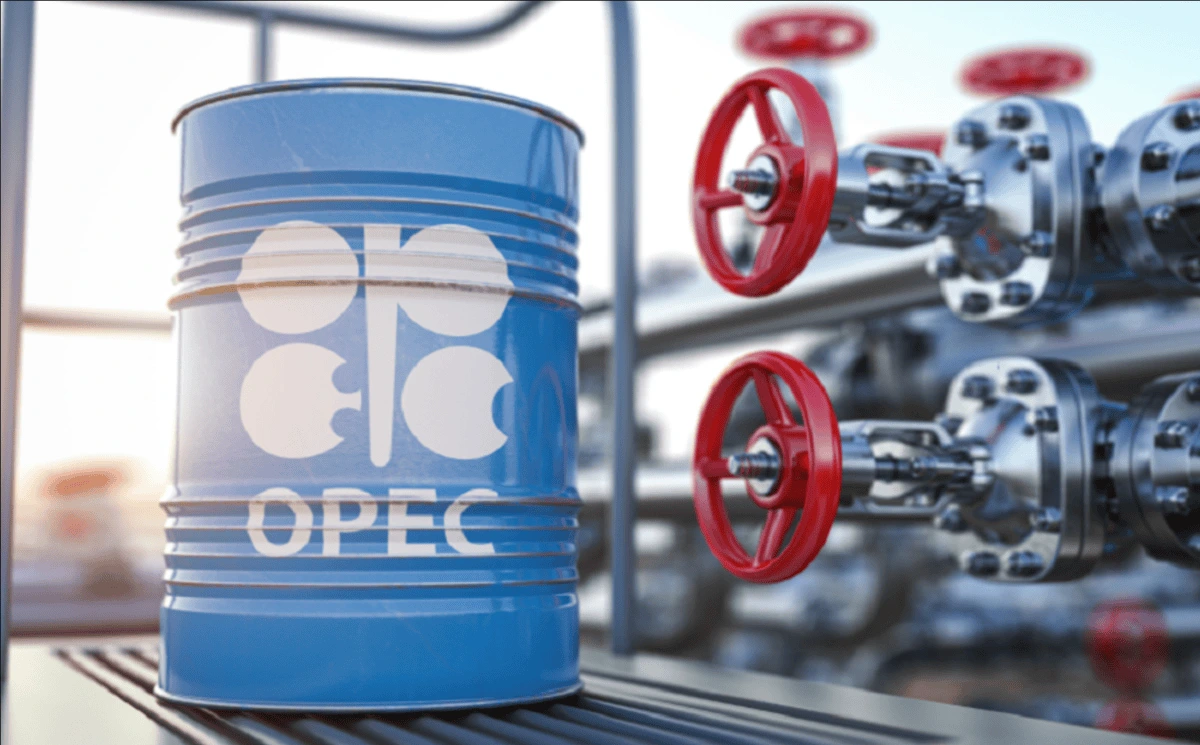
Nigeria is meeting its OPEC quota but continues to miss its own oil production budget target for 2026.
Nigeria’s 2026 budget assumes oil production of 1.84 million barrels per day (crude oil plus condensates).
It remains correct to assert that Nigeria has met and slightly exceeded its OPEC crude oil quota of 1.50 million bpd for three consecutive months (May, June, and July 2026). Using the latest July numbers, we can see that crude production averaged 1.505 million barrels per day.
However, Nigeria is falling short. Nigeria has not met its 2026 oil output budget projection for those same three months. Output remains well below the 1.84 million-barrel budget target.
Also Read
The most recent peak, quoted by the Nigerian Upstream Petroleum Regulatory Commission (NUPRC), showed total liquids output at about 1.67 million barrels per day in July.
This creates an output gap of 150,000–200,000 barrels per day. This recurring gap between budget projections and actual production highlights a persistent issue in Nigeria’s public finance.
Why the numbers matter
Oil remains Nigeria’s single most important and largest source of foreign exchange and a major contributor to government revenues.
- When production falls short of the budget assumption, the effects ripple through the entire economy. First, foreign exchange inflows decline. This translates to fewer dollars entering the official market.
- This fall in incoming FX income puts pressure on the naira. It makes it harder for the Central Bank to manage exchange rate stability.
- Second, oil-related taxes and royalties fall. Petroleum Profit Tax, royalties, and other upstream revenues are directly tied to the volume of oil produced and sold. When fewer barrels are lifted, the Federation Account receives less money to share among the federal, state and local governments.
- The decline in Federation revenues widens the budget deficit. The government planned its spending based on a certain level of oil revenue.
- When that revenue does not materialise, the difference has to be filled somehow. In practice, this usually means more borrowing. Fourth, public debt rises as Higher deficits lead to increased domestic and external borrowing to cover the fiscal hole. Nigeria’s debt service costs are already elevated. Every additional naira borrowed adds to the future burden of interest and principal repayments.
Finally, this increase in borrowing redirects a larger share of available revenue to debt servicing. Money that could have gone into roads, power, education or healthcare is instead used to pay creditors. This reduces the fiscal space for development spending.
The shortfall is therefore not just a production issue. It is a fiscal and macroeconomic problem that affects the exchange rate, inflation, government borrowing and the quality of public services.
The political difficulty of honest budgeting
One logical response would be to lower the budget. The government could lower the oil production assumption to a more realistic level, cut non-essential spending, and reduce planned borrowing. In theory, this would produce a more credible fiscal framework.
In practice, this is extremely difficult in an election year. New personnel costs in the military, demands from ASUU and other unions, and the general pressure to spend make austerity politically unattractive.
A revised budget that openly admits lower oil revenue and proposes spending cuts is thus unlikely to gain easy approval. This is the classic public finance dilemma where the budget numbers demand realism, but the politics rewards excess spending.
What can actually be done
There are two options.
The first is to deliver a rapid increase in production to at least 1.84 million barrels per day—a hard but not impossible prospect given persistent security and operational challenges, despite recent improvements. T
- The second, more desirable path is to reduce dependence on oil by aggressively growing the non-oil economy, expanding productivity, creating new private-sector jobs, and increasing consumption. These actions broaden the tax base and stabilise revenue. Growing the non-oil economy requires consistent policy, reliable infrastructure, easier business conditions, and improved security.
- In the short term, the government should prioritise high-impact projects, enhance tax collection, and be more realistic about oil production figures.
Until oil production rises sustainably or the non-oil economy closes the gap, pressure on the naira, fiscal accounts, and debt will persist.
Warning: Undefined variable $post_id in /var/www/nairametrics/wp-content/themes/nairametrics/comments.php on line 134
Warning: Undefined variable $post_id in /var/www/nairametrics/wp-content/themes/nairametrics/comments.php on line 134