

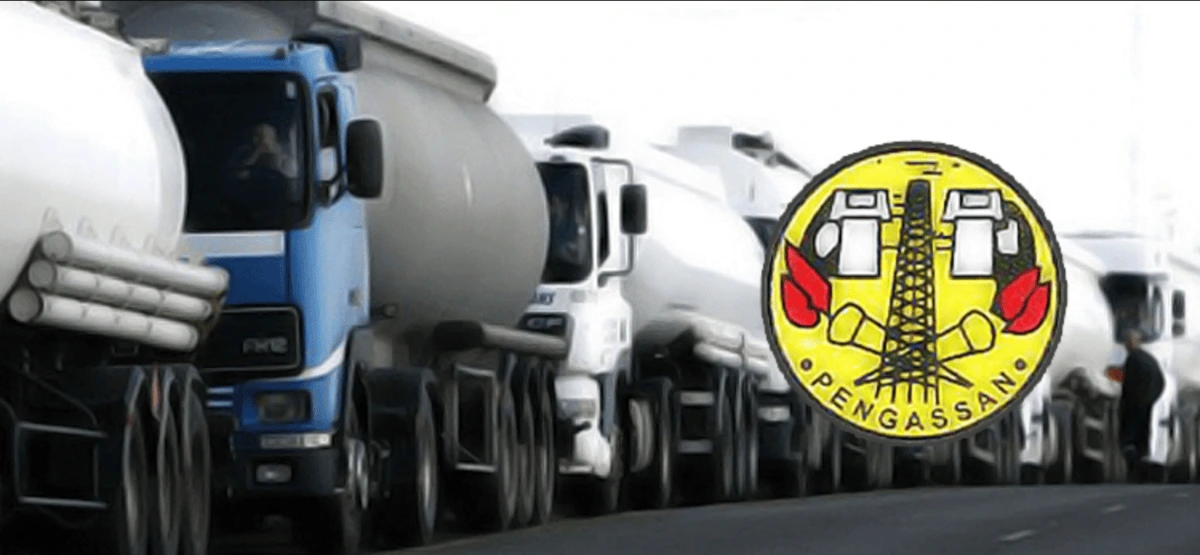
The Petroleum and Natural Gas Senior Staff Association of Nigeria (PENGASSAN) has called for the free trade of Dangote Refinery products across Africa, stressing that it will be better for the country and the continent at large.
PENGASSAN President, Festus Osifo, disclosed this in an exclusive interview with Nairametrics on Tuesday on the sidelines of the second West Africa Refined Fuel Market Conference in Abuja.
Nairametrics previously reported that at the opening session of the conference on Monday, the Nigerian Midstream and Downstream Petroleum Regulatory Authority (NMDPRA) called for a functioning West African fuel market amid regional supply chains that are being fundamentally reshaped by the Dangote Refinery.
What PENGASSAN is saying
When asked for his view of the conference, Osifo told Nairametrics that this kind of forum provides opportunities for stakeholders to “remove those things that are hindering” an efficient supply of fuel.
Also Read
- “For example, you are exporting products from Nigeria to Ghana, you have to pay several taxes and several duties. But in Europe, they have a single market; so for us, even if you extend it (single fuel market) to the entire Africa, it is even better. The more we can inter-trade, most especially on energy, the more we have better energy security.
- “Dangote Refinery should be able to send its products from Nigeria to Togo, from Togo to Angola and all that. The more we open the boundary, the better for us,” he said.
Asked to react to calls for the expansion of Nigeria’s refinery capacity and the entry of more investors, he responded in the affirmative.
- According to him, “the more we have competition, the better for the industry.”
- He explained that if stakeholders in the region open up the energy sector, there will be more refineries and more people investing in the sector.
- He stressed that more investments in Nigeria’s refining capacity will be better for the country because, according to him, competition will bring down the price of petroleum products.
House Committee assures of benchmark legislative backing
Also speaking on Monday, the House Committee on Petroleum Resources chairman, Ikenga Ugochinyere, assured that the federal lawmakers would provide “legislative backing” regarding stakeholders’ call for a regional fuel price benchmark.
He emphasised the need for a fiscal climate that rewards infrastructure while calling for the security of fuel stocks.
- However, he urged stakeholders to end the summit with concrete decisions and deals, highlighting that ideas are good, but “ownership” is key.
S&P Global Commodity Insights’ position on benchmark
Addressing the audience, the Head of Platts at S&P Global Energy, Vera Blei, said a trusted, independent benchmark pricing system is the way to go.
- However, she urged West African leaders to “be bold” and create their regional fuel price benchmark.
- “It is not easy to create a true regional benchmark,” she said, adding that the reality is that stakeholders would have to create the true benchmark for the region by themselves, while S&P can provide the reference prices available.
She acknowledged that Dangote Refinery is running at full capacity, urging stakeholders to keep building and maintaining the country’s refining capacity.
Get up to speed
- This is according to sources inside Dangote Refinery who shared this information with Nairametrics.
- The sources indicated that the shipments, comprising Premium Motor Spirit (PMS), were delivered to multiple African destinations, including Côte d’Ivoire, Cameroon, Tanzania, Ghana, and Togo.
- Nairametrics earlier reported that the Dangote Refinery was witnessing a surge in inquiries from African countries seeking fuel supplies following disruptions caused by the Iran war.
According to Bloomberg, several governments were scrambling to secure alternative sources of refined petroleum products.
About 75% of the refinery’s output is reserved for Nigeria, while the remaining capacity is available for export.
What you should know
In February, Dangote Petroleum Refinery announced that it had reached its full designed capacity of 650,000 barrels of crude oil per day (bpd), making it the first refinery globally to achieve full nameplate capacity in a single train of that scale.
The refinery said the milestone was achieved following the optimisation of its Crude Distillation Unit (CDU) and Motor Spirit (MS) production block, further strengthening steady-state operations at Africa’s largest oil refining facility.
Warning: Undefined variable $post_id in /var/www/nairametrics/wp-content/themes/nairametrics/comments.php on line 134
Warning: Undefined variable $post_id in /var/www/nairametrics/wp-content/themes/nairametrics/comments.php on line 134