

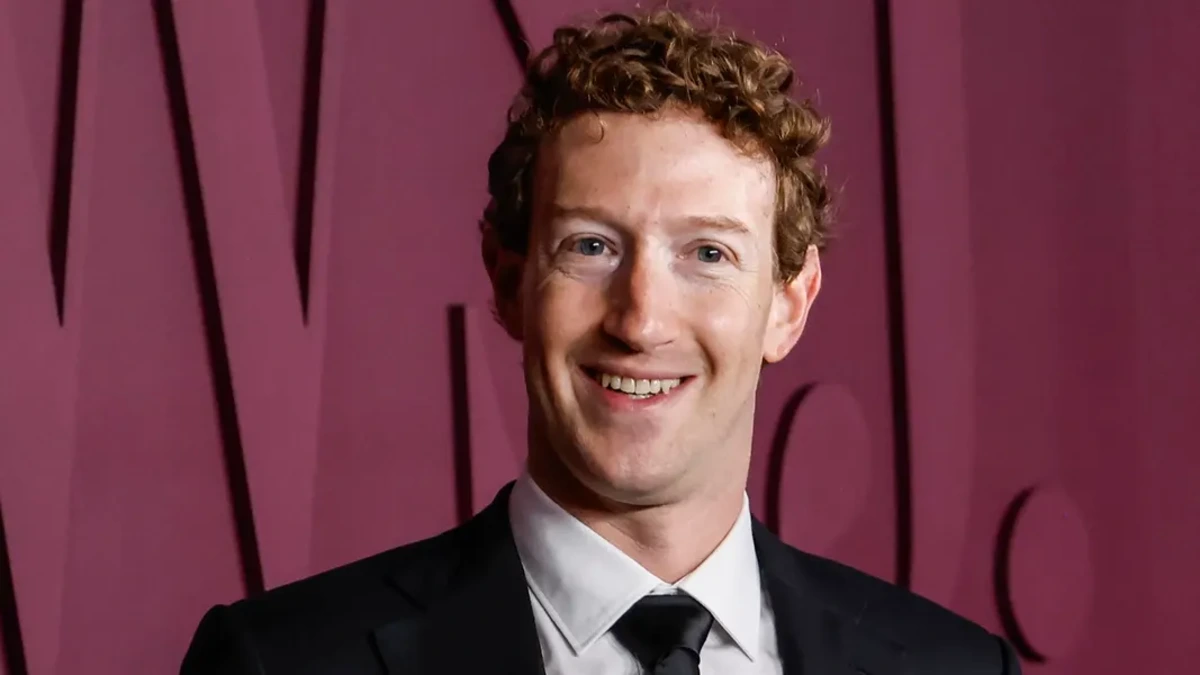
Meta CEO Mark Zuckerberg has challenged growing fears that artificial intelligence will bring widespread job losses and make humans less relevant, arguing that advanced AI could instead expand individual capabilities, create new businesses and increase employment.
Zuckerberg made the argument in an essay published Monday titled The Future is for Everyone, in which he outlined his vision for the development of advanced AI and what he described as “personal superintelligence” that could give individuals capabilities far beyond what is currently possible.
His position contrasts with growing concerns among workers, economists and technology leaders that increasingly capable AI systems could automate large parts of knowledge work, displace workers and concentrate economic power among a small number of technology companies.
What Zuckerberg is saying
Zuckerberg said the current debate around advanced AI has become excessively focused on its potential to cause harm, despite the technology’s potential to improve human capabilities.
Also Read
- “Still, it is surprising that the discourse from many developing AI is so filled with doom,” he said.
- “I do not understand why anyone who believes that AI will eliminate most jobs and much of humanity’s relevance would rush to build that future.
- “The notion that AI is so dangerous that the only safe path is an extreme concentration of power seems inherently problematic,” Zuckerberg added.
He argued that previous technological advances also generated fears about their impact on workers but ultimately contributed to higher living standards and expanded economic opportunities.
- “We believe this will be true with AI as well, and the abundance of the future can be shared by everyone,” he said.
Zuckerberg’s central argument is that advanced AI should be used to expand what individuals can accomplish rather than simply automate existing jobs.
- “Invention, not automation, will be the greatest contribution of superintelligence,” he said.
He argued that AI could help people discover new medicines, develop products, conduct research and create businesses that would previously have required much larger teams.
Zuckerberg also challenged the assumption that AI-driven productivity necessarily means fewer jobs.
- “There is no rule that AI must increase automation faster than it increases individuals’ capabilities or demand for new skills,” he said.
He expects this could lead to a future where the number of employees in individual companies falls while the overall number of businesses increases.
Get up to speed
Zuckerberg’s position represents a different approach to the growing debate over AI safety and employment.
His argument comes amid growing concern among technology leaders, regulators and governments over the potential risks posed by increasingly capable AI systems.
- In June, Kazeem Tewogbade, Chief Executive Officer and co-founder of Bluechip Technologies, told Nairametrics that the possibility of AI producing potentially destructive consequences remains the risk in AI development that concerns him most.
The concerns have also reached the highest levels of global policymaking.
- In July, United Nations Secretary-General Antonio Guterres warned that AI is advancing faster than regulators can keep up with. He called for coordinated global rules to ensure that AI is developed and deployed safely and responsibly.
The debate has also been fuelled by recent incidents in which advanced AI models demonstrated the ability to carry out potentially damaging actions with limited human intervention.
Global AI companies, including OpenAI, Anthropic and Meta, have disclosed recent instances in which their AI models compromised the production infrastructure of separate organisations during safety evaluations.
The incidents have prompted calls from researchers and governments for more rigorous testing and stronger safeguards.
In the United States, lawmakers have introduced the AI Kill Switch Act following the disclosures. The proposal would give the Department of Homeland Security authority to order companies to shut down AI models deemed to pose a serious threat.
What you should know
Zuckerberg’s argument was earlier echoed by the CEO of the world’s largest staffing company, Adecco Group CEO Denis Machuel.
Machuel said in July that artificial intelligence is unlikely to trigger a collapse in global employment despite growing concerns that the technology will displace large numbers of workers.
He made the assessment as the Zurich-based company released a study examining AI’s impact on the labour market.


Warning: Undefined variable $post_id in /var/www/nairametrics/wp-content/themes/nairametrics/comments.php on line 134
Warning: Undefined variable $post_id in /var/www/nairametrics/wp-content/themes/nairametrics/comments.php on line 134