

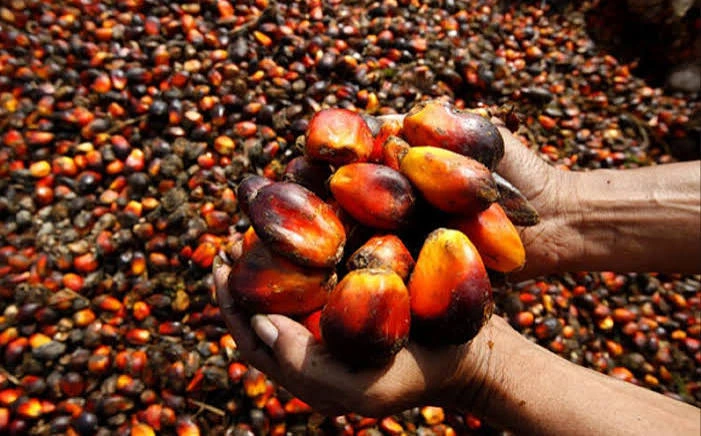
Cheap palm oil imports are beginning to undercut domestic crude palm oil (CPO) prices, forcing local producers Okomu Oil and Presco to report their weakest revenue performance in years.
This is according to the H1 2026 financial statements released by both companies, which point to mounting pressure on domestic pricing despite healthy production volumes.
The results suggest that increased imports of cheaper palm oil from Indonesia and Malaysia, following changes to import duty policy, are beginning to erode the pricing power that local producers have enjoyed in recent years.
What the data is saying
Presco and Okomu, which together account for more than 99% of the sector’s combined revenue, are facing downward price pressure as cheaper imported palm oil continues to undercut domestic CPO prices.
Also Read
- Presco’s revenue was flat year-on-year in H1 2026 at N198 billion, marking the first time since 2018 that the company has failed to record revenue growth during the period.
- Okomu Oil’s revenue declined 3.5% year-on-year to N125.3 billion, while Presco’s pre-tax profit rose 9.2% compared with a 12% decline reported by Okomu Oil. In the corresponding period of 2025, both companies had recorded triple-digit pre-tax profit growth.
- Okomu attributed the weaker performance to import-driven competition, stating: “A decline in domestic palm oil sales driven by persistent import-driven competitive pressures impacted Crude Palm Oil prices during the period. Strong domestic demand is expected to continue supporting revenue growth, and margin performance should remain healthy if production efficiencies are sustained.”
Both companies are absorbing the impact of cheaper imported palm oil, with the industry warning that sustained import volumes could place additional pressure on domestic CPO prices in the second half of 2026.
More Insights
Presco demonstrated stronger operational resilience than Okomu during the period, posting an 83.4% gross profit margin compared with Okomu’s 64.4%.
- Presco’s vertically integrated business model, which includes refining and fractionating CPO into finished vegetable oil products, enables it to capture additional value beyond primary production. Its Ghana operations also provide revenue diversification outside the Nigerian market. Despite flat consolidated revenue, Presco’s Nigerian revenue rose about 12.4% to N164.63 billion, while its standalone company revenue increased 6.9% to N116.57 billion.
- Okomu remains more exposed to domestic CPO pricing, with approximately 90% of its sales generated within Nigeria. Although the company maintains one of the strongest balance sheets on the Nigerian Exchange, with only N3.9 billion in long-term borrowings against N21.4 billion in cash, its limited downstream integration leaves earnings more vulnerable to falling CPO prices.
Presco also strengthened its balance sheet by repaying N197.3 billion in loans during H1 2026, reducing borrowings from N317.3 billion to N119.5 billion and moving into a net cash position. The company declared an interim dividend of N10 per share and ended the period with N129.9 billion in cash.
While both companies continue to face pricing pressure from imported palm oil, Presco’s diversified operations and stronger downstream presence have provided a greater cushion against declining domestic CPO prices.
What you should know
Palm oil remains a critical commodity in Nigeria’s food production industry, serving as a key input for cooking oil, margarine, soaps, cosmetics and several consumer goods, while palm kernel products also support the animal feed sector.
- Nigeria’s palm oil industry is central to the country’s food import substitution strategy, and government policies on import duties and agricultural incentives could significantly influence the competitiveness of domestic producers.
- Despite one of the world’s highest per capita palm oil consumption rates, Nigeria still produces only about 40% of its domestic demand, leaving the market dependent on imports to bridge the supply gap.
- Presco’s shares currently trade at about N2,070 with a price-to-earnings ratio of 19.6 times and a market capitalisation of N2.4 trillion, while Okomu Oil trades at approximately N1,418 with a price-to-earnings ratio of 26.9 times and a market capitalisation of N1.35 trillion.
The latest half-year results represent an important test for both companies after several years of rapid earnings growth. Whether domestic CPO prices recover as import dynamics normalise will likely determine if Presco and Okomu can return to the strong revenue trajectory that has supported their premium market valuations.



Warning: Undefined variable $post_id in /var/www/nairametrics/wp-content/themes/nairametrics/comments.php on line 134
Warning: Undefined variable $post_id in /var/www/nairametrics/wp-content/themes/nairametrics/comments.php on line 134