

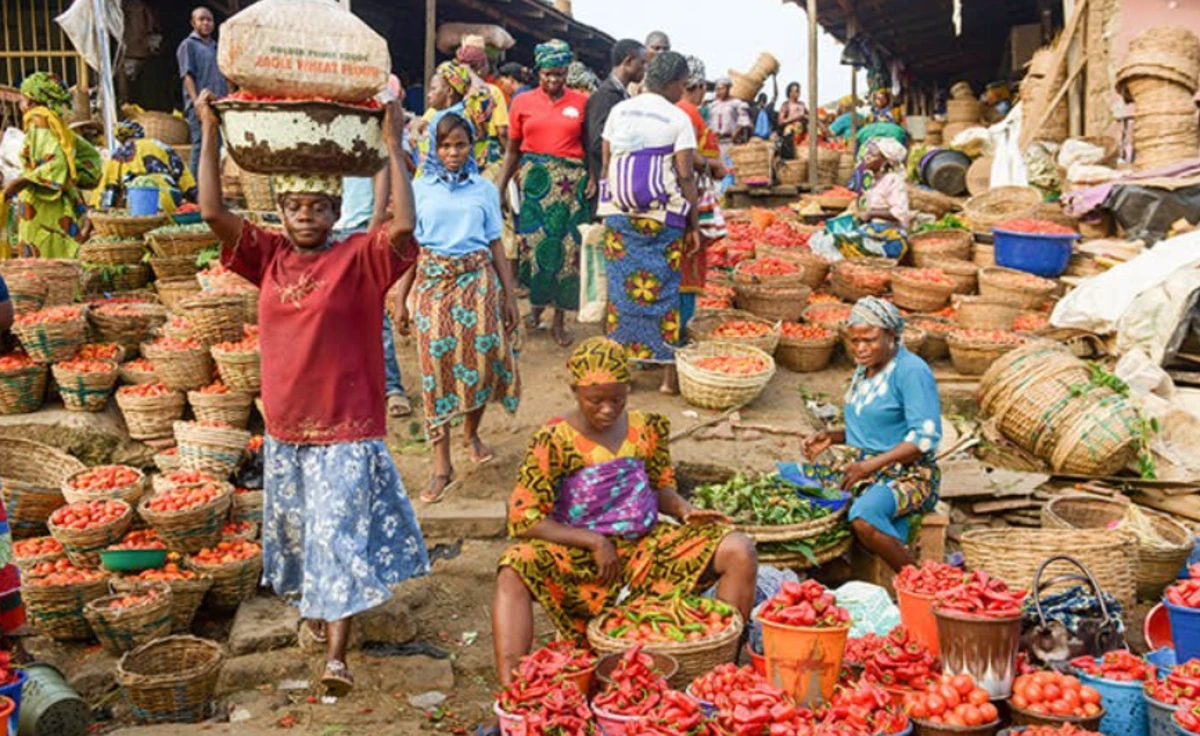
Rising cost of living has become the single biggest issue shaping the lives of young Africans, overtaking infectious diseases and political instability, according to the 2026 African Youth Survey.
The survey published by the Ichikowitz Family Foundation, found that rising food and fuel costs driven by geopolitical tensions and global conflicts continue to place significant financial pressure on young people across the continent.
Economic issues now dominate young Africans’ priorities broadly, with creating well-paying jobs identified as the most important issue for African leaders to address at 27%, closely followed by reducing government corruption at 25%.
The latest edition of the study surveyed 4,901 young people aged 18 to 24 across 16 African countries, including Nigeria, South Africa, Kenya, Ghana, Ethiopia, and Rwanda, through face-to-face interviews.
Also Read
What the report is saying
The report said 27% of young Africans identified the rising cost of living as the event that has had the greatest impact on their lives over the past five years, ahead of infectious diseases at 22% and political instability at 19%.
- “The rising cost of living has moved to the top of African youth’s collective experience, overtaking deaths from infectious diseases and political instability as the most impactful event of the past five years,” the report stated.
While earlier editions of the survey were more strongly shaped by COVID-related impacts (particularly deaths from infectious diseases) and political instability in several countries, the 2026 findings show that the rising cost of living is now the single most impactful event of the past five years.
- The survey found that economic concerns are also shaping how young Africans view international partnerships.
- Many respondents prioritise relationships with foreign countries that deliver tangible benefits including investment, infrastructure development, and trade, over political or ideological alignments.
- “When they (African youths) think about international partnerships, many are asking less about ideology and more about whether those partnerships will improve their prospects,” the report says.
More insights
The new findings come as Africa’s youth population continues to expand at an unprecedented pace, placing growing pressure on governments to create enough economic opportunities for a rapidly expanding workforce.
- According to the United Nations, the number of young Africans is expected to exceed 800 million by 2050, making the continent home to the world’s largest youth population.
- Yet employment growth has failed to keep pace, leaving many young people vulnerable to unemployment, underemployment and rising living costs.
- This demographic shift may help explain why the rising cost of living has overtaken infectious diseases and political instability as the biggest issue affecting young Africans.
As more young people enter the labour market without access to stable, well-paying jobs, higher prices for food, fuel and other essentials are placing increasing strain on household incomes and limiting economic mobility.
What you should know
The report’s findings are particularly significant for Nigeria, where economic pressures have increasingly shaped how young people view the country’s future.
- A separate finding from the 2026 African Youth Survey shows that three out of four Nigerian youths believe the country is heading in the wrong direction, placing Nigeria among the most pessimistic countries surveyed across 16 African nations.
- However, the survey also reveals a measure of optimism beyond Nigeria’s borders. The share of Nigerian youths who believe Africa is moving in the right direction has tripled from 10% in 2024 to 30% in 2026.
This indicates that while confidence in the country’s trajectory remains subdued, many still believe the continent offers stronger long-term prospects.



Warning: Undefined variable $post_id in /var/www/nairametrics/wp-content/themes/nairametrics/comments.php on line 134
Warning: Undefined variable $post_id in /var/www/nairametrics/wp-content/themes/nairametrics/comments.php on line 134