

The Federal Government will, in the coming days, publish a detailed analysis of savings from the removal of fuel and foreign exchange subsidies and how the funds have been utilised.
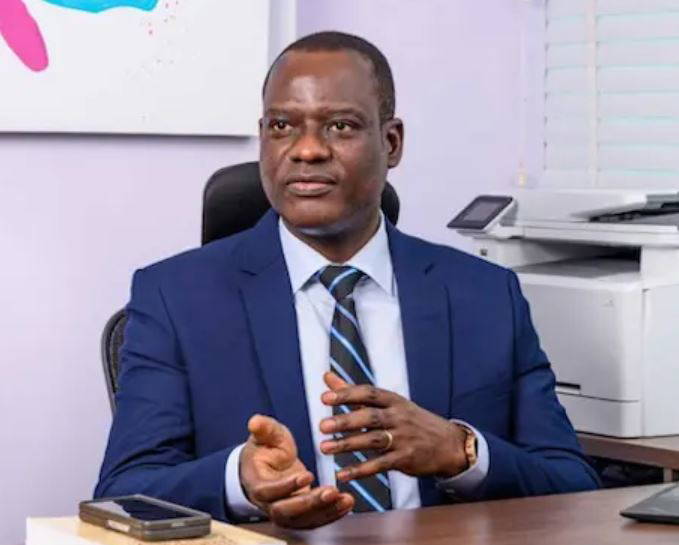
The Minister of Finance and Coordinating Minister of the Economy, Taiwo Oyedele, disclosed this on Thursday at the 7th Africa Emerging Markets Forum in Abuja, saying the report is part of the government’s responsibility to explain the impact of its economic reforms to Nigerians.
The minister said the reforms were primarily designed to eliminate distortions and corruption in the economy, while the savings generated have helped the government meet existing financial obligations and fund key interventions.
What the Minister is saying
Oyedele said the government would provide a detailed account of the savings from the reforms and their utilisation, amid continued scrutiny of the impact of the policies.
Also Read
- “But the money saving is also important. In a few days, you will see the detailed analysis because we believe that we owe a duty to explain what we do to the Nigerian people. That’s what transparency looks like,” he said.
- “If you stop printing money, the spending doesn’t disappear. You need to finance the money you were printing before. That was part of where the savings went,” Oyedele said.
- “Instead of paying eight per cent on our debt, we’re paying as high as 24 per cent. When you need to service debts, you don’t debate whether you need to pay. You pay, and you pay on time,” he added.
- “There is a high cost of borrowing in an economy where you need growth to deliver results from reforms,” Oyedele said.
Oyedele said the government is also working on a framework to reduce the cost of capital without introducing fresh subsidies, as it seeks to complement the Central Bank of Nigeria’s efforts to control inflation and support economic growth.
Oyedele said the combined impact of the former fuel and foreign exchange subsidies was equivalent to about 5% of GDP, but stressed that eliminating economic distortions and corruption was the primary objective of the reforms.
He said part of the savings has been used to offset the government’s Ways and Means obligations.
- “The government has used part of the resources to fund the implementation of the new national minimum wage”, he stated.
Oyedele said the government previously relied heavily on money creation to finance spending, while interest rates were around 8% and the national minimum wage stood at N30,000.
The minister said the government’s decision to stop deficit financing through money creation did not eliminate its existing spending obligations, making it necessary to find alternative sources of financing.
Oyedele said the government has expanded cash transfers to 15 million vulnerable households, lifting an estimated 7.5 million Nigerians out of extreme poverty.
He said the government is also pursuing reforms aimed at improving investment, productivity and job creation.
The minister said the government would continue to balance fiscal obligations with its broader objective of creating conditions for private-sector-led growth.
More Insights
One of the administration’s most significant policy decisions was the removal of the petrol subsidy shortly after President Tinubu assumed office in 2023. The policy significantly altered Nigeria’s fiscal structure and revenue allocation framework.
- Analysts estimate that ending the fuel subsidy saved the government between N4 trillion and N6 trillion annually in fiscal costs.
- Latest data shows that FAAC shared N2.036 trillion among the Federal Government, states and local government councils for March 2026, compared to N629 billion shared in March 2023.
- The administration also discontinued the Central Bank of Nigeria’s “Ways and Means” overdraft financing arrangement, which had contributed to liquidity expansion and inflationary pressures.
Foreign exchange reforms aimed at unifying Nigeria’s multiple exchange rate windows improved transparency within the FX market despite continued volatility in the naira.
What you should know
The Central Bank of Nigeria has maintained the MPR at 26.5 per cent at both its 305th and 306th meetings.
The MPR stood at 18.75% in 2023 before the CBN raised it by 400 basis points to 22.75% in February 2024. Subsequent rate hikes throughout 2024 pushed the benchmark interest rate to 27.5% by the end of the year, as the apex bank sought to rein in persistent inflationary pressures.
Alongside the rate hikes, the CBN also tightened liquidity conditions by increasing the Cash Reserve Ratio (CRR) for commercial banks from 32.5% to 45% in early 2024, before raising it further to 50% to absorb excess liquidity from the banking system.
Warning: Undefined variable $post_id in /var/www/nairametrics/wp-content/themes/nairametrics/comments.php on line 134
Warning: Undefined variable $post_id in /var/www/nairametrics/wp-content/themes/nairametrics/comments.php on line 134