

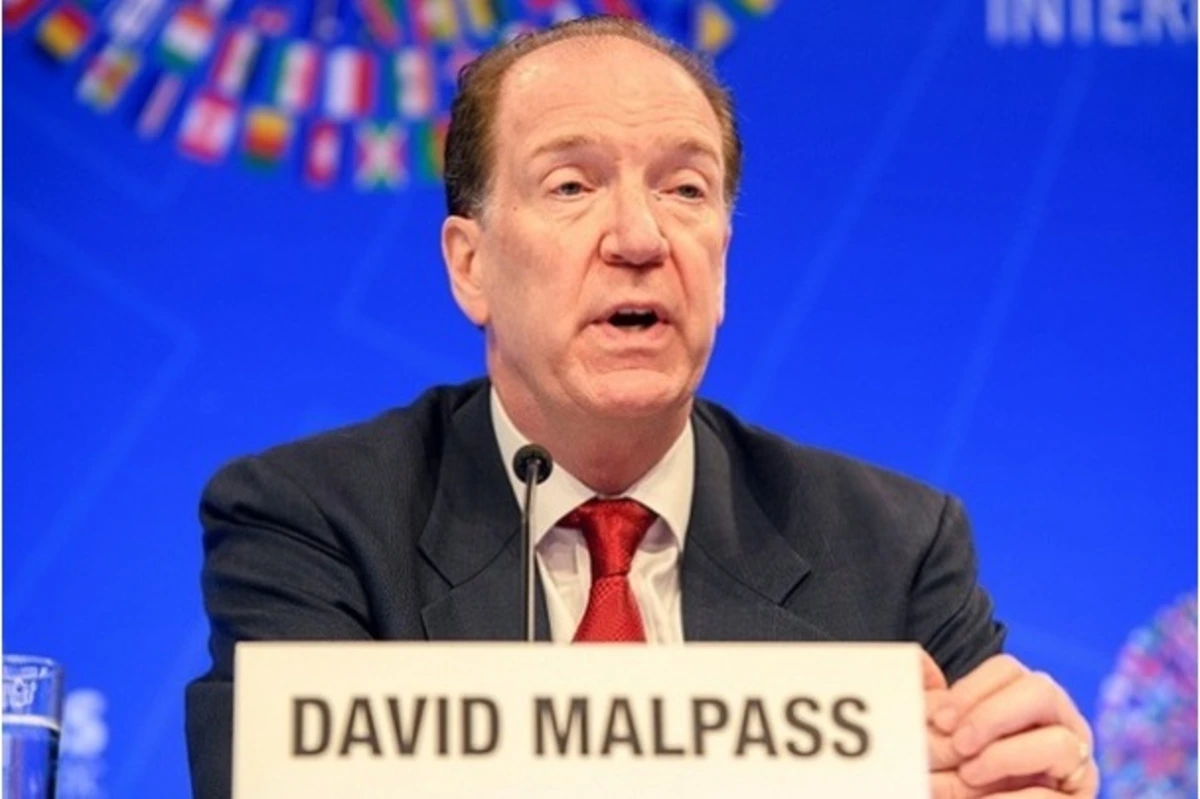
Former World Bank President David Malpass has raised concerns over Nigeria’s growing use of collateral-backed borrowing, warning that increasingly opaque debt structures could complicate future debt restructuring and discourage investment if the country’s debt becomes unsustainable.
Malpass made the remarks in a new World Bank Policy Research Working Paper titled Public Debt and Central Banks, published on the bank’s website and based on the Stanley Fischer Memorial Lecture delivered at the World Bank Group’s Annual Bank Conference on Development Economics.
The former World Bank chief argued that collateralised sovereign borrowing had become less transparent across several developing economies, including Nigeria, creating what he described as “a new race toward seniority in the capital structure.”
What Malpass is saying
Malpass noted that private sector transactions to distressed or high-risk sovereigns have become less transparent recently.
Also Read
- “Sophisticated new collateralized transactions – I saw ones in Angola, Nigeria, and Senegal – are creating a new race toward seniority in the capital structure,” he wrote.
He warned that such financing structures would make future debt restructurings more complex, adding that the growing use of multilateral development bank guarantee products had not been tested during sovereign debt crises.
- “This will add further complexity to restructurings as will the expansion of MDB guarantee products. Their sturdiness and value have not been tested in a restructuring context, and I am sceptical they are adding true value,” he stated.
Beyond Nigeria’s collateral-backed borrowing, Malpass criticised the broader global debt restructuring framework, arguing that current mechanisms had failed to deliver meaningful relief for heavily indebted countries.
He said debt reconciliation remained hampered by limited transparency, noting that experts were still “working in the dark” on many sovereign debt contracts, particularly those involving Chinese lending programmes. He added that some commercial debt transactions now contained non-disclosure clauses, making it difficult to determine whether they genuinely served the interests of borrowing countries.
Currency reforms seen as growth catalyst
Malpass also devoted considerable attention to Nigeria’s exchange rate regime, arguing that stable currencies were essential for sustained economic growth and rising household incomes.
He grouped Nigeria with Ethiopia and Egypt among countries where floating exchange rate regimes and multiple exchange rate systems had, in his view, transferred wealth from low-income wage earners to privileged groups while worsening poverty.
According to the report, Nigeria’s per capita income stands at roughly $1,500, or about $4 per day, while median income is even lower because income and wealth remain concentrated among a relatively small proportion of the population.
- “The upside from currency reform would be massive,” he wrote, noting that Nigerians working abroad routinely earned “10 or 20 times as much” as those at home.
Malpass disclosed that during his tenure as World Bank president, he held several meetings with Nigeria’s previous president, members of the cabinet and the World Bank’s Nigeria team to identify reforms capable of transforming the economy.
Those discussions identified currency stabilisation and exchange rate unification, oil sector reforms, tax reforms and agricultural liberalisation, particularly in rice production, as key ingredients for faster growth.
- “These could transform Nigeria’s economy as much as China’s 1993 reforms launched its sustained 10% real growth rate,” he said.
What you should know
The International Monetary Fund (IMF) recently cautioned Nigeria over its plan to raise up to $5 billion through a derivatives-based financing arrangement with First Abu Dhabi Bank, warning that such transactions are often complex and lack transparency.
- The warning came months after the Senate approved the proposed deal, which involves a Total Return Swap (TRS) structure aimed at refinancing expensive debt and funding critical infrastructure projects.
- Fitch Ratings also warned that Nigeria’s proposed $5 billion Total Return Swap (TRS) with First Abu Dhabi Bank could obscure sovereign debt risks and complicate any future debt restructuring.
Despite the warnings, Nigeria accessed the first tranche of its $5 billion derivatives financing arrangement with the United Arab Emirates’ largest lender, marking the latest step in the Federal Government’s strategy to refinance expensive debt and bridge its budget financing gap.
The Federal Government drew about $1.5 billion over the past two weeks through a Total Return Swap (TRS) transaction with First Abu Dhabi Bank (FAB).



Warning: Undefined variable $post_id in /var/www/nairametrics/wp-content/themes/nairametrics/comments.php on line 134
Warning: Undefined variable $post_id in /var/www/nairametrics/wp-content/themes/nairametrics/comments.php on line 134