

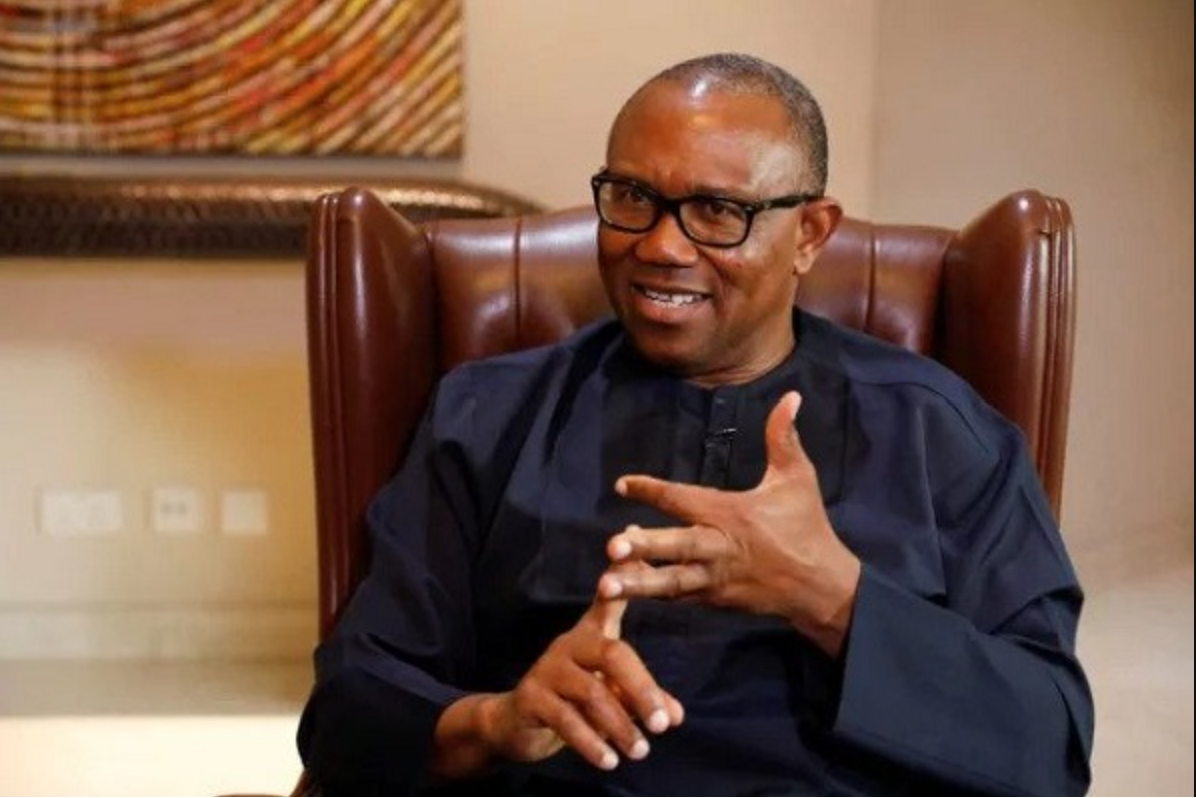
The presidential candidate of the Nigeria Democratic Congress (NDC), Peter Obi, has said he would introduce policies that place a greater tax burden on the wealthy to support productive sectors of the economy and improve the welfare of ordinary Nigerians if elected President.
Speaking during an interview on Channels Television on Sunday, Obi said his administration would redirect resources currently lost through what he described as excessive and poorly explained tax waivers towards agriculture and other sectors capable of creating jobs and boosting economic growth.
Responding to a question on whether he would tax the rich to help the poor, Obi answered in the affirmative, saying wealthier Nigerians should contribute more to national development.
- “I would do that. And I would explain it to them,” he said.
What Obi is saying
According to Obi, the objective would not simply be to make the poor more comfortable but to ensure that public resources are deployed to benefit the broader economy.
Also Read
Obi criticised the Federal Government over what he described as excessive customs duty waivers, claiming that about N34 trillion in waivers were granted in 2025 despite the Nigeria Customs Service generating only about N7.7 trillion in revenue during the period.
He argued that granting waivers worth several times the agency’s revenue raises concerns about fiscal transparency and accountability.
- “How can you budget N54.9 trillion and then grant N34 trillion customs waivers? Even the revenue Customs made was just N7.7 trillion. So we granted almost over four times their revenue as waiver,” he said.
According to Obi, the waivers amounted to more than 70% of the national budget and were equivalent to nearly 8% of Nigeria’s Gross Domestic Product (GDP).
- “Which country can give 8% of its GDP as waiver without the explanation?” he asked.
Calls for greater accountability
Obi also questioned what he described as a lack of transparency in public finances, alleging that key fiscal decisions have not been adequately explained to Nigerians.
He referenced concerns raised by the International Monetary Fund (IMF) regarding what he described as N8.8 trillion in spending outside the budget, saying government must provide greater accountability for the use of public funds.
According to him, resources currently lost through broad tax incentives and waivers could instead be channelled into supporting farmers and improving agricultural productivity.
He also argued that efforts to remove fuel subsidies, stabilise the naira and increase taxes should have been accompanied by stronger measures to reduce corruption and eliminate waste in government.
Desperate for a better Nigeria
Speaking further on his ambition, Obi said he is not desperate to be the President but desperate to see a better nation.
- “I’ve always said I’m not desperate to be Nigerian president. I’m desperate to see Nigeria work. So if it’s working, I’ll support whatever makes it work,” he said.
- “I want to see a country where, I keep saying it every day, a child of nobody can be somebody without knowing anybody; where we can put people out of poverty; where young ones will have the opportunity to live, get a job, be an entrepreneur, and participate in what young people do all over the world.”
When asked if it matters whether he holds a position or not, Obi, a former Anambra governor, said he does not “even need to hold any post”.
- “I’m contesting because I believe that I will fix it. I will unite the country. I’m able to do it to show an example of what is possible,” Obi said.
He also denied claims that he would divide Nigeria if elected as president in 2027. Obi responded to comments by former Borno State Governor Ali Modu Sheriff, who had questioned his ability to unify the country.
What you should know
Earlier in May this year, while accepting his nomination as the presidential candidate of the Nigerian Democratic Congress (NDC) at the party’s convention in Abuja, Obi pledged to increase Nigeria’s electricity generation and distribution capacity by at least 10,000 megawatts (MW) within four years, representing a 250% increase from the country’s current output of about 4,000MW.
The former Anambra State governor outlined plans across key sectors including power, healthcare, education, agriculture, security and governance, which he said would form the foundation of his administration if elected president in 2027.
Warning: Undefined variable $post_id in /var/www/nairametrics/wp-content/themes/nairametrics/comments.php on line 134
Warning: Undefined variable $post_id in /var/www/nairametrics/wp-content/themes/nairametrics/comments.php on line 134