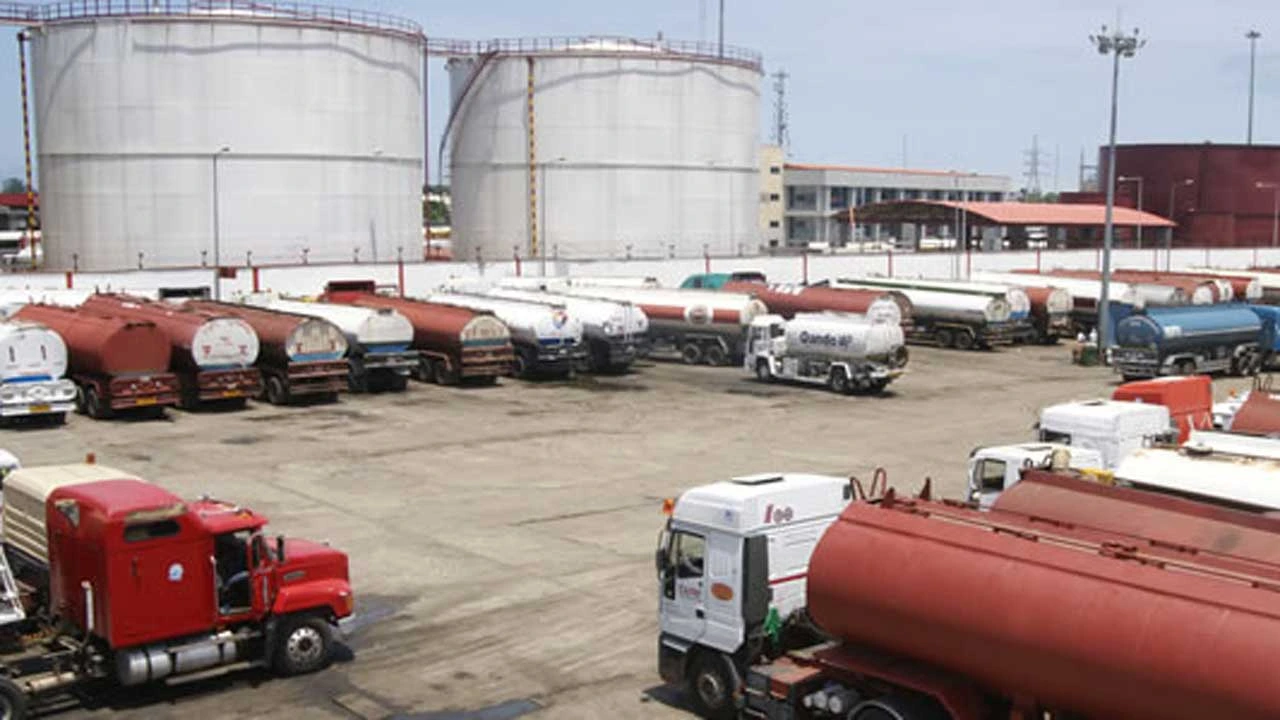
Oil marketers have accused major fuel importers, including AA Rano and Matrix, of fixing the price of imported petrol at about N1,350 per litre, significantly higher than the price offered by Dangote Petroleum Refinery.
This was confirmed by the National Publicity Secretary of the Independent Petroleum Marketers Association of Nigeria (IPMAN), Chinedu Ukadike, during a chat with Nairametrics.
Ukadike argued that the recent import licences issued to major marketers to moderate domestic fuel prices have failed to achieve their intended objective.
His comments come amid reports that marketers have slowed large-scale fuel loading while awaiting clarity on Dangote Refinery’s new pricing template and the cost of newly imported products.
Also Read
What they are saying
Ukadike urged the Federal Government to address concerns surrounding price volatility, import licences and the sale of petroleum products in United States dollars.
- “The independent marketers of Nigeria have looked at the price volatility, the issue of the import license, the issue of sales of petroleum products and dollar, and holistically I will want to use the opportunity to urge the federal government to be able to look into this thing transparently through NMDPRA, who is the authority of the industry.”
- “The recent import licenses, which are termed to be used as a guiding principle or a check to domestic petroleum products being refined here in Nigeria, is not yielding the results as was expected by the independent marketers.”
- “We were shocked, even as I am talking to you now, that the licenses that have been given to AA Rano, Matrix and all the rest of them to be able to import petroleum products are trying to peg the price of petroleum products at N1,350, which is far, far distant from what Dangote has been selling to us.”
- “The essence of NNPC or NMDPRA or the federal government opening up this import license is also to checkmate the domestic price of petroleum products, whereas where we find out that these products are being brought into this country, one, their qualities are questionable, two, their prices are higher.”
Ukadike questioned the rationale behind the pricing strategy adopted by the importers, warning that continued price volatility would create further uncertainty for independent marketers.
More insight
Ukadike said increased fuel importation is also putting additional pressure on Nigeria’s foreign exchange market, with the exchange rate approaching N1,400 to the United States dollar.
- He called on the Federal Government to engage Dangote Petroleum Refinery and ensure the continuation of crude oil sales in naira to support lower domestic fuel prices.
- According to him, international PLATTS pricing for imported petroleum products is about 20% higher than the prices offered by Dangote Refinery, making imports less competitive.
- He argued that importing products from Lomé at higher prices unnecessarily increases demand for foreign exchange and puts further pressure on the naira.
Ukadike also opposed what he described as the indiscriminate issuance of import licences, warning that it could ultimately result in higher petrol prices for consumers.
He maintained that sustaining domestic refining and naira-denominated crude supply would be more beneficial to Nigeria’s energy market than relying on expensive imports.
What you should know
Earlier this month, the Federal Government convened a stakeholders’ meeting with Dangote Refinery, the Federal Competition and Consumer Protection Commission (FCCPC), the Petroleum Products Retail Outlets Owners Association of Nigeria (PETROAN), and other key players in the downstream petroleum sector to discuss fair reductions in petrol prices nationwide.
- The meeting followed a directive by the Minister of State for Petroleum Resources (Oil), Senator Heineken Lokpobiri, urging marketers to reduce pump prices in line with the recent decline in global crude oil prices.
- Participants at the meeting included representatives of TotalEnergies, Eterna, Matrix Energy, the Depot and Petroleum Products Retailers Association of Nigeria (DPRP), the Major Energy Marketers Association of Nigeria (MEMAN), the Depot and Petroleum Products Marketers Association of Nigeria (DAPPMAN), IPMAN and the Nigerian Association of Road Transport Owners (NARTO).
- Officials of the Nigerian Midstream and Downstream Petroleum Regulatory Authority (NMDPRA) were also in attendance to discuss pricing, competition and broader developments in the downstream petroleum market.
The meeting forms part of the Federal Government’s efforts to promote a more competitive downstream sector while ensuring that domestic fuel prices reflect prevailing market realities.