
 Follow Us on Google Discover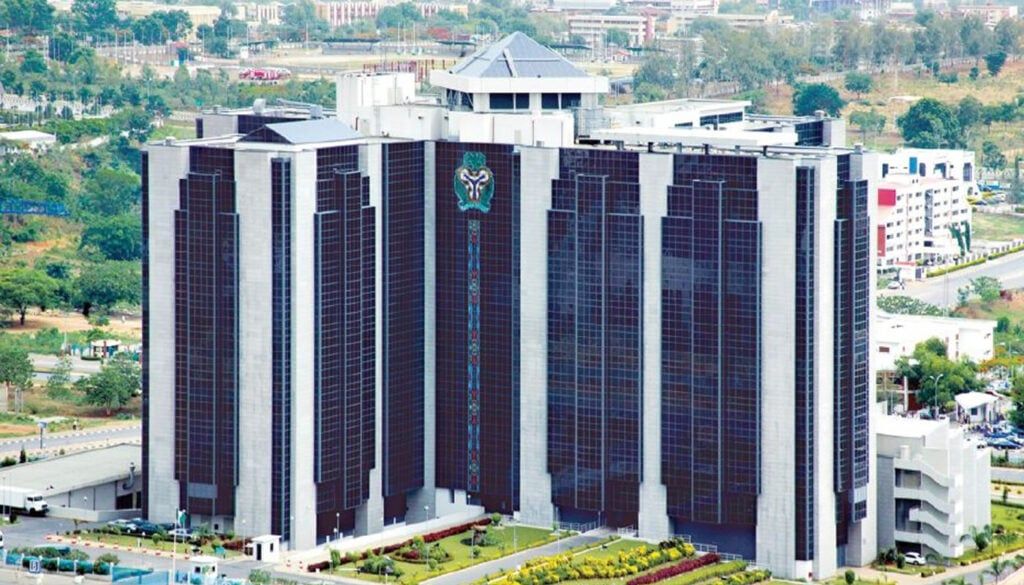
The Central Bank of Nigeria’s (CBN) directive requiring banks, payment service providers, and fintech companies to localise customer and transaction data within Nigeria by January 2027 is emerging as a major catalyst for the country’s digital infrastructure industry.
While some industry stakeholders have raised concerns about implementation costs and infrastructure readiness, operators of Nigeria’s largest data centres say the policy could unlock significant investment, strengthen data sovereignty, and reduce the country’s dependence on foreign infrastructure.
The policy comes at a time when governments around the world are increasingly prioritising control over critical data assets amid growing concerns around cybersecurity, artificial intelligence, and national digital sovereignty.
What they are saying
For data centre operators, the directive represents more than a compliance requirement. It is viewed as a strategic economic intervention capable of accelerating Nigeria’s digital transformation.
Other News
Speaking with Nairametrics, Chief Executive Officer of Digital Realty Nigeria, Ikechukwu Nnamani, described the directive as a positive development for both the data centre industry and the wider economy.
According to him, localising banking and financial services data will stimulate demand for data centre services, encourage the expansion of existing facilities, and attract investment into new infrastructure projects.
- “This is a positive development not only for the data centre industry but for the digital economy of Nigeria. The benefits of this directive will positively impact all aspects of the digital economy,” Nnamani said.
He noted that increased demand for data hosting capacity would create jobs during both the construction and operational phases of new facilities, while also improving service quality through lower latency.
According to Nnamani, local hosting would significantly reduce the volume of foreign exchange currently spent on overseas cloud and data hosting services.
Many Nigerian financial institutions currently rely on servers and cloud infrastructure located in Europe, North America, and other international markets, resulting in recurring foreign currency payments.
- “With localisation of data and services within Nigeria-based data centres, payments will be made in local currency, thereby reducing pressure on the naira. The country will also save foreign exchange that currently goes to countries where these servers are located,” he said.
The potential foreign exchange savings come at a time when Nigeria continues to seek ways of reducing demand for dollars and strengthening domestic economic activity.
The capacity question
One of the biggest questions surrounding the CBN directive is whether Nigeria currently possesses sufficient infrastructure to accommodate the massive amount of banking and fintech data that could be repatriated over the next six months.
However, data centre operators insist that capacity concerns are overstated.
According to the Chief Executive Officer of Open Access Data Centres (OADC), Dr. Ayotunde Coker, Nigeria has already established itself as a regional digital infrastructure hub.
Coker noted that while Nigeria may not yet match Europe in terms of overall data centre scale, it is already delivering infrastructure at globally competitive standards.
For the Digital Reality CEO, Nnamani, he believes that infrastructure supply naturally follows demand and that the CBN’s policy could provide the commercial incentives needed to accelerate investments in the sector.
- “Whatever additional capacity is needed will be built if there is demand. It is the demand that drives provision of supply,” he said.
Coker added that Lagos has increasingly emerged as West Africa’s digital infrastructure hub, attracting significant investment into large-scale facilities capable of supporting growing cloud, fintech, and artificial intelligence workloads.
Beyond capacity, power availability has also been one of the most important considerations for data centre operators globally, particularly as facilities grow larger and more energy intensive.
Coker noted that while power challenges are not unique to Nigeria, operators are increasingly leveraging gas-powered generation and working with state governments to expand electricity infrastructure.
According to him, the ongoing decentralisation of Nigeria’s power sector could also provide additional opportunities for states to support large-scale digital infrastructure investments.
Backstory
Earlier this month, the CBN issued a directive mandating banks, fintech firms, mobile money operators and other payment service providers to store all payment transaction data generated within Nigeria on local servers.
This came as part of a broader regulatory push to strengthen oversight, improve transparency and reduce concentration risks in the country’s fast-growing digital payments ecosystem.
The directive was contained in a circular issued by the apex bank on Monday and signed by the Director of the Payments System Supervision Department, Rakiya O. Yusuf.
According to the circular, all financial institutions and payment system participants facilitating transactions in Nigeria must ensure that payment transaction data generated within the country are stored and managed locally in compliance with Nigerian data protection laws and regulations.
The CBN stated that affected institutions must fully comply with the requirement by January 1, 2027.
More insights
The timing of the CBN’s directive coincides with a period of unprecedented growth in demand for computing infrastructure globally.
Artificial intelligence applications are driving a surge in demand for high-density data centres, with operators increasingly expanding their facilities to support more powerful computing environments.
According to the Chief Executive Officer of Precise Financial Systems Ltd (PFS), Mr. Yele Okeremi, the CBN’s directive reflects a broader global shift towards treating data as a strategic national resource.
He argued that Africa has historically exported raw commodities while allowing others to capture most of the value through processing and industrialisation. According to him, the same risk now exists in the digital economy.
- “If you do not control your data and continue to give it out, you are back to the basis of primary products again,” Okeremi said.
Drawing from the resource-based theory of economic development, he argued that nations with greater control over strategic assets tend to generate greater economic value.
He described data as one of the most valuable resources in today’s economy, particularly in an era increasingly defined by artificial intelligence.
- “This is the world of artificial intelligence, and what artificial intelligence thrives on is data. If you take away data, you’ve taken away the oxygen from AI,” he said.
Okeremi questioned Africa’s position within the global AI value chain despite the continent generating vast amounts of data that power digital platforms around the world.
- “Africa produces enormous data to power what’s going on globally. What’s our share in the value chain?” he asked.
What you should know
Earlier, the Chairman of the Association of Licensed Telecommunications Operators of Nigeria (ALTON) Engr. Gbenga Adebayo had dismissed concerns about Nigeria’s infrastructure readiness for the directive, pointing to existing data centre capacity already serving international clients as evidence the market can absorb the shift.
- “I’m happy to say that we have a lot of data centres owned and managed by Nigerians that are hosting data from other jurisdictions. If people overseas can host their data here, why can’t we host our own data here?” he asked.
He explained that Nigeria currently has about six Tier III data centres, with additional facilities under development, but stressed that hosting capacity matters more than the raw number of facilities.
 Follow Us on Google Discover


Laudable for a working society. But for a country with poor social security and no social register among politicians this corrupt and non sensible it’s a very poor idea and a waste of resources. White elephant idea.
Warning: Undefined variable $post_id in /var/www/nairametrics/wp-content/themes/nairametrics/comments.php on line 134
Warning: Undefined variable $post_id in /var/www/nairametrics/wp-content/themes/nairametrics/comments.php on line 134