
 Follow Us on Google Discover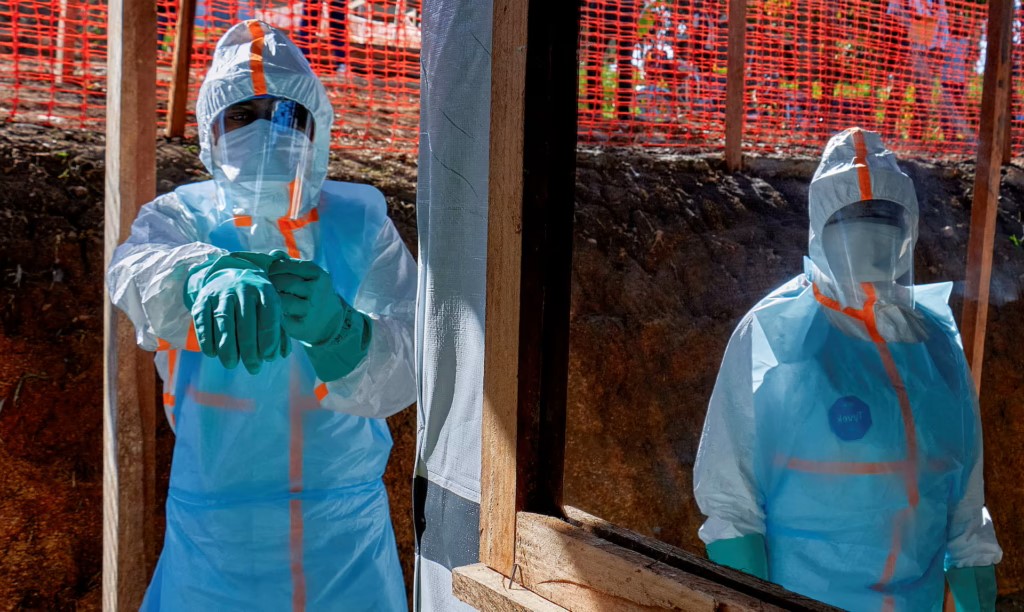
The response to the Ebola outbreak in Central and East Africa has suffered a major setback, with 89 deaths recorded in the past week alone, raising fears that the disease could spiral further out of control if urgent action is not taken.
This was disclosed on Thursday by the Director-General of the Africa Centres for Disease Control and Prevention (Africa CDC), Dr. Jean Kaseya, during an online media briefing on the Ebola outbreak.
Kaseya warned that the worsening situation is being compounded by overstretched healthcare facilities, with treatment centres already operating at 95% bed occupancy.
He also noted that only 77% of identified contacts are being monitored daily, well below the 95% target considered necessary to effectively contain the virus.
Other News
What they are saying
Africa CDC warned that unless authorities urgently expand treatment capacity and improve early detection of infections, the outbreak could continue to accelerate.
According to Kaseya, increasing the number of treatment beds alone will not be enough, as health officials must also identify infected individuals earlier before they become severely ill and require hospitalisation.
- “Authorities must build more treatment capacity while detecting cases sooner. Early detection prevents patients from needing hospital admission,” he said.
He identified Bunia, Gwampara, Mugwalu and Nyankunde in Ituri Province as the main outbreak hotspots, while Katwa, Beni and Butembo in North Kivu also remain active centres of transmission.
According to him, five health zones in Ituri and one in North Kivu account for more than 85% of all reported infections, making those areas critical to containment efforts.
More insights
One of the biggest concerns for health authorities is the growing scale of community transmission, which suggests the virus is spreading beyond the reach of existing surveillance systems.
Kaseya revealed that while current records show about 8,000 contacts linked to confirmed cases, epidemiological estimates suggest the actual number should be closer to 40,000.
More worrying, only 77% of listed contacts are being monitored daily, significantly below the 95% target required to effectively interrupt transmission chains.
- “Current data shows 8,000 contacts listed, but 40,000 are expected based on averages. Only 77% are monitored daily, below the 95 per cent target,” he said.
The Africa CDC chief also disclosed that only 30% of newly confirmed Ebola cases are emerging from known contacts already under observation.
The figures suggest that a substantial proportion of infections are occurring undetected within communities, making containment significantly more difficult.
To address the gap, Africa CDC plans to deploy 20,000 local youths as community response teams to identify missing contacts and strengthen surveillance efforts.
- “Africa CDC is zooming in on contact tracing to stop community transmission. Strong surveillance is key to reaching and confirming the peak,” Kaseya added.
Strengthening the response amid critical funding and vaccine gaps
Health authorities are racing to contain the outbreak despite significant operational challenges, funding shortfalls and the absence of an approved vaccine for the strain currently driving infections.
To slow the spread of the disease, the Congolese government has directed that travellers flying from Ituri to Kinshasa must avoid onward travel for 21 days, a measure aimed at reducing the risk of transmission to other regions and countries.
Kaseya disclosed that while the approved Ebola response plan required $518 million, donor commitments have reached $910 million. However, only 13% of the pledged funds have so far been disbursed.
The challenge is compounded by the humanitarian situation in eastern Democratic Republic of Congo, where 69 displacement camps across Ituri and North Kivu host approximately 1.15 million displaced persons in addition to about one million returnees.
According to Africa CDC, these camps remain among the most difficult environments for detecting cases and tracing contacts.
- “With humanitarian needs added, the required budget rose to 1.4 billion dollars. Without it, the outbreak will expand and cost more in the long term,” Kaseya warned.
What you should know
The worsening Ebola outbreak comes as the United States ramps up efforts to shield its own population from the disease.
- Earlier on Thursday, Nairametrics reported that President Donald Trump’s administration requested more than $1.4 billion in emergency funding from Congress to strengthen Ebola preparedness, prevent the virus from reaching the United States and support the evacuation and treatment of Americans exposed to the disease abroad.
- The proposal includes $800 million for a quarantine facility in Kenya designed primarily for Americans exposed to Ebola, alongside funding for treatment supplies, contact tracing, logistics and infection-control measures.
- Another $500 million is earmarked for global health security initiatives, including disease surveillance, laboratory capacity and cross-border coordination aimed at reducing the risk of Ebola reaching U.S. territory.
The proposal has sparked debate because much of the funding appears focused on preventing the virus from reaching America rather than directly supporting outbreak control efforts in the countries where transmission is occurring.
The planned quarantine centre in Kenya has also generated opposition from local residents and activists, who argue that hosting such a facility could expose communities in a country that has not recorded a confirmed Ebola case.
 Follow Us on Google Discover


Warning: Undefined variable $post_id in /var/www/nairametrics/wp-content/themes/nairametrics/comments.php on line 134
Warning: Undefined variable $post_id in /var/www/nairametrics/wp-content/themes/nairametrics/comments.php on line 134