
 Follow Us on Google Discover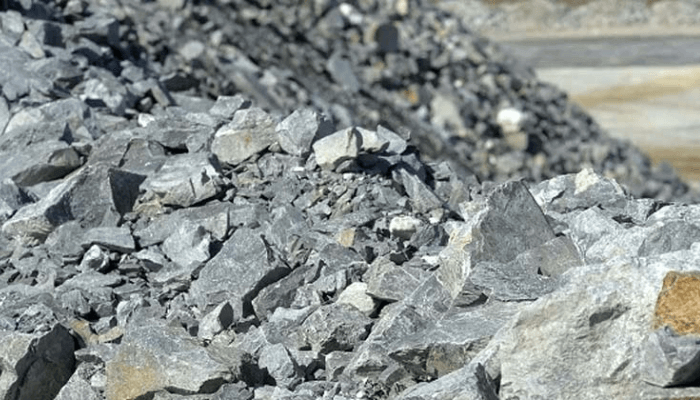
Global demand for lithium is projected to increase by 353% between 2024 and 2040, while demand for graphite is expected to rise by 131%, demonstrating the growing importance of critical minerals in the global energy transition.
This was disclosed in a recent report by the United Nations Conference on Trade and Development (UNCTAD), which highlighted the increasing role of clean energy technologies in driving demand for strategic minerals.
According to the report, clean technologies are expected to account for an increasingly larger share of total mineral demand over the coming decades as countries accelerate efforts to decarbonise their economies.
What the report is saying
UNCTAD noted that demand growth for key energy transition minerals will be largely driven by the rapid expansion of clean energy technologies.
Other News
Graphite demand is expected to increase by 131% during the same between 2024 and 2040.
The share of lithium demand linked to clean technologies is projected to increase from 62% in 2024 to 87% by 2040.
- “Clean technologies are expected to take a much larger share of total demand. Between 2024 and 2040, the clean technologies share of nickel demand is projected to increase from 17% to 42%, and of magnet rare earth elements from 21% to 31%,” UNCTAD stated.
The report highlights how electric vehicles, battery storage systems, renewable energy infrastructure and other low-carbon technologies are becoming dominant drivers of global mineral demand.
More insights
UNCTAD also noted a growing trend among resource-rich countries to impose restrictions on exports of critical minerals in a bid to strengthen domestic value addition and industrialisation.
Since 2020, nearly 100 new export measures have been introduced on critical energy transition minerals globally, the report noted.
- These measures, UNCTAD noted, include 37 licensing requirements, 31 export taxes, 29 export bans, and one export quota.
- The Democratic Republic of the Congo has introduced the highest number of export measures, followed by China and Indonesia.
- Governments are increasingly seeking to process minerals locally rather than exporting raw materials.
The rise in export restrictions reflects growing competition among countries seeking to capture a larger share of the economic benefits associated with the global clean energy transition.
What you should know
Critical minerals such as lithium, graphite, nickel, cobalt and rare earth elements are essential components in electric vehicle batteries, renewable energy technologies, power grids and energy storage systems.
- Lithium is a key raw material used in rechargeable batteries for electric vehicles and energy storage.
- Graphite is widely used in battery anodes and industrial applications.
- Nickel and rare earth elements are critical for battery manufacturing, wind turbines and other clean energy technologies.
In 2025, the Federal Government said Chinese companies have invested over $1.3 billion in Nigeria’s lithium processing sector since the administration of President Bola Tinubu took office.
 Follow Us on Google Discover
Warning: Undefined variable $post_id in /var/www/nairametrics/wp-content/themes/nairametrics/comments.php on line 134
Warning: Undefined variable $post_id in /var/www/nairametrics/wp-content/themes/nairametrics/comments.php on line 134