
 Follow Us on Google Discover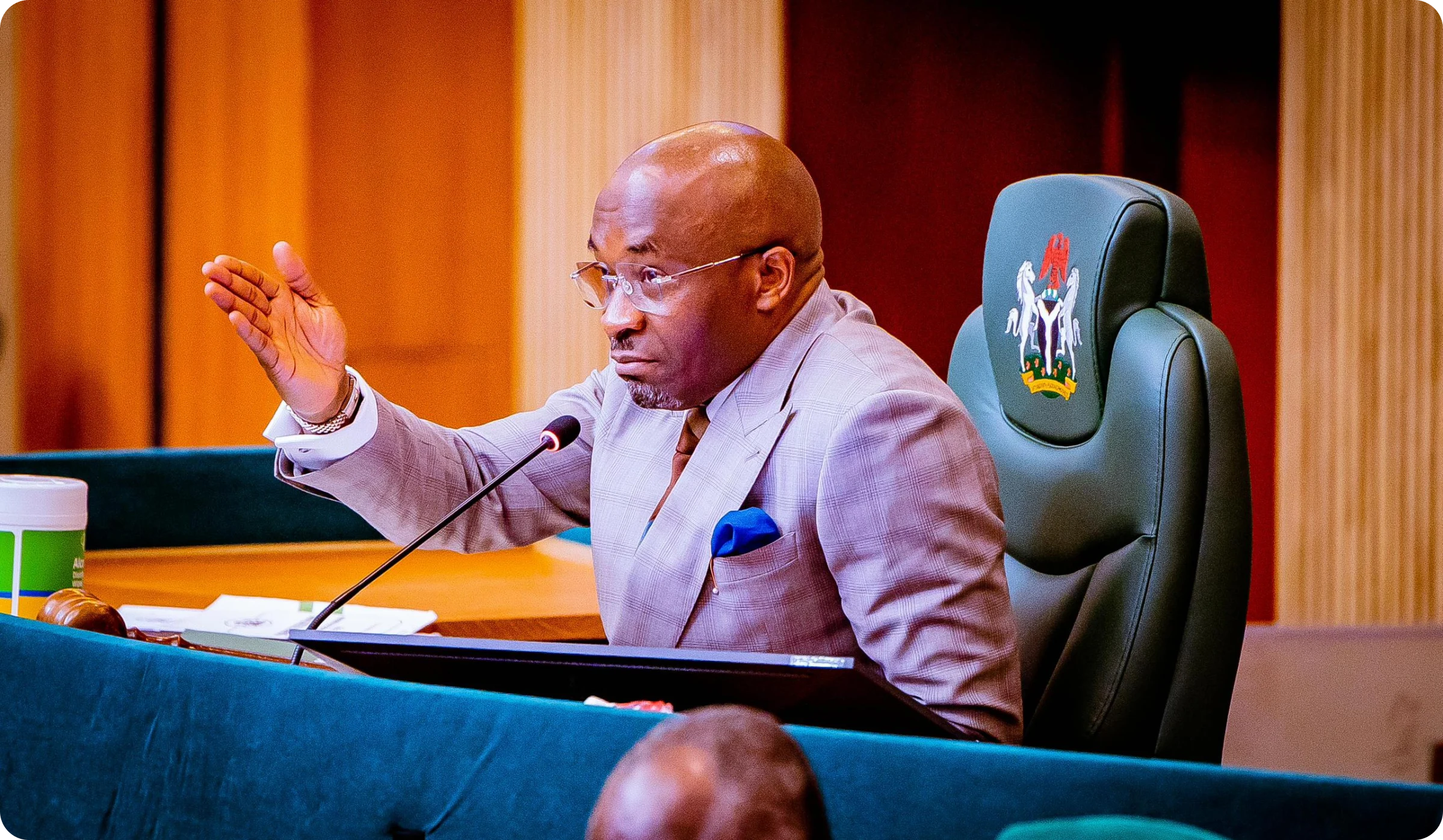
The Deputy Speaker of the House of Representatives, Benjamin Kalu, has said that the National Assembly is committed to advancing reforms aimed at strengthening data protection and cybersecurity.
He disclosed this while speaking as the Special Guest of Honour at the national launch of the Digital Switch-Over (DSO) Free TV Project on Wednesday, an event attended by Nairametrics.
The assurance comes days after the National Broadcasting Commission (NBC) disclosed that its planned Digital Switch-Over (DSO) would unlock the N605.2 billion national advertising market for broadcasters and content creators.
What they are saying
According to Kalu, there is a need for legislation that promotes local digital content and skills development, as well as updated spectrum management policies to ensure the efficient use of national digital assets across broadcasting, telecommunications, and satellite services.
Other News
- “This initiative will expand access to quality broadcasting services, create jobs, stimulate investment, and unlock new opportunities across the media and creative sectors,” he said.
- The lawmaker also revealed that the 10th House of Representatives “is advancing reforms to strengthen Nigeria’s digital future, including stronger data protection and cybersecurity,” while expanding affordable broadband access to diverse communities.
According to him, this legislative direction aligns with the broader vision of the President Tinubu-led administration, which has placed the digital economy at the centre of Nigeria’s economic transformation agenda.
For his part, the Minister of Information and National Orientation, Mohammed Idris, addressed concerns regarding the implementation of the DSO, stating that the initiative is not designed to replace one technology with another but to expand access and embrace innovation across multiple delivery platforms.
- “Digital Terrestrial Television remains an integral component of Nigeria’s digital broadcasting framework. What we are pursuing is a hybrid broadcasting model that combines DTT, direct-to-home satellite delivery, and digital application-based platforms,” the minister added.
He said the government remains committed to promoting indigenous technology, supporting Nigerian manufacturers, and ensuring that local creativity remains at the centre of the broadcasting ecosystem.
He urged stakeholders to ensure that the DSO creates opportunities for Nigerian businesses, innovators, and workers.
Also speaking at the launch, the Minister of Communications, Innovation and Digital Economy, Dr Bosun Tijani, said the DSO is one of the first visible outcomes of a broader digital infrastructure strategy aimed at building a one-trillion-dollar economy.
Tijani highlighted ongoing plans to deploy 90,000 kilometres of fibre-optic infrastructure across the country and noted that the President has approved the launch of two additional satellites to strengthen Nigeria’s communications capacity, which will also benefit neighbouring countries.
More insights
Providing further insight into the development, the Managing Director/Chief Executive Officer of NIGCOMSAT Limited, Mrs Jane Egerton-Idehen, said the Digital Switch-Over is not merely a broadcasting upgrade but a nation-building initiative and a strategic investment in Nigeria’s digital future.
- “Beyond the N600 billion opportunity it brings, beyond delivering broadcast services to 40 million homes, and beyond creating jobs in the advertising sector and the wider economy, it is one of the most important steps we can take toward creating a more informed, connected, inclusive, and empowered society.”
She, however, noted that the progress of the DSO project would require collaboration, partnership, vision, and leadership across the board.
Backstory
In 2022, the Nigerian government announced that it had paid all debts owed to service providers under the Digital Switch-Over (DSO) project.
The former Minister of Information and Culture, Alhaji Lai Mohammed, disclosed this in Abuja during the 26th edition of President Muhammadu Buhari’s Administration Scorecard Series.
Mohammed said that following a stall in the DSO process, the Federal Government resolved that, for the transition to be sustainable, it should be driven by the private sector.
He stressed that the DSO must be self-sustaining and that there should be no further subsidies for set-top boxes or signal carriage.
What you should know
The Digital Switch-Over is the transition from analogue to digital broadcasting.
The Federal Government commenced the implementation of the White Paper on the Digital Switch-Over (DSO) in 2022. The policy will limit Pay-TV operators from carrying their own signals.
The Federal Government has also maintained that the DSO remains a priority project because it will improve local content, create jobs, curb content monopolies, and enhance on-demand television services for millions of Nigerian households.
 Follow Us on Google Discover
Warning: Undefined variable $post_id in /var/www/nairametrics/wp-content/themes/nairametrics/comments.php on line 134
Warning: Undefined variable $post_id in /var/www/nairametrics/wp-content/themes/nairametrics/comments.php on line 134