
 Follow Us on Google Discover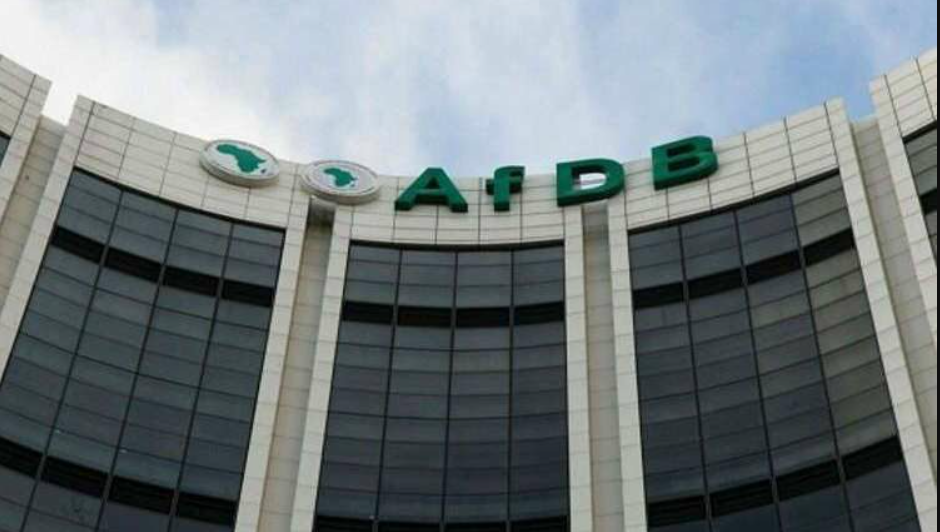
The African Development Bank (AfDB) has committed $86 million to the implementation of Nigeria’s Special Agro-Industrial Processing Zones (SAPZ) Programme as of March 31, marking a major milestone in the country’s efforts to drive agro-industrial development and strengthen agricultural value chains.
The disclosure was made on Wednesday in Abuja during the Mid-Term Review Meeting of the SAPZ Programme by Dr. Orison Amu, Implementation Support Manager at the AfDB’s Nigeria Country Department, who was represented by the programme’s Task Manager, Bernard Onzima.
According to the bank, the programme has recorded a commitment rate of 41% and a disbursement rate of 12%, equivalent to $25 million, with commitments expected to rise to 70% and disbursements to 35% by the end of 2026.
The SAPZ initiative is one of AfDB’s flagship programmes designed to transform agriculture through agro-industrial development.
Other News
The programme aims to reduce post-harvest losses, improve productivity, encourage value addition, create jobs, boost food production and attract private-sector investment into agricultural value chains.
What they are saying
Speaking at the meeting, AfDB said the first phase of Nigeria’s SAPZ programme, approved in December 2021, experienced implementation delays, becoming operational in March 2023 and achieving the requirements for its first disbursement in August of the same year.
- “The bank approved the Nigeria SAPZ Programme Phase I in December 2021. However, it only became effective in March 2023, while conditions precedent to first disbursement were met in August 2023, about 20 months after approval,” he said.
Amu explained that the programme is structured around agricultural production clusters, where farming, aggregation, processing and distribution activities are concentrated within designated zones supported by modern infrastructure.
He added that the initiative is designed to stimulate investment across agricultural value chains, improve linkages between producers and processors, and support broader economic transformation through climate-resilient infrastructure and industrial development.
More insights
Also speaking at the meeting, the Country Director of the International Fund for Agricultural Development (IFAD), Ms. Dede Ekoue, who was represented by Mr Isaac Mensah, Programme Officer, IFAD Country Office, Nigeria, West and Central Africa Division, disclosed that the organisation had approved an additional $50 million for SAPZ implementation, bringing its total commitment to $100 million after an earlier $50 million financing agreement.
She noted that IFAD-financed components of the programme in Kano and Ogun States had already delivered measurable results, reaching more than 17,000 smallholder farmers with agricultural support services.
According to her, over 14,000 farmers are currently receiving climate information services to improve productivity and resilience, while more than 9,000 farmers have benefited from improved agricultural inputs aimed at increasing yields.
Ekoue also highlighted the programme’s role in connecting farmers to agro-industrial markets through the Multi-Stakeholder Agribusiness Forum (MAF), while creating opportunities for women, youths, agripreneurs and rural enterprises.
- “We see SAPZ as an important platform to connect producers to markets, reduce post-harvest losses, stimulate private investment, create jobs and strengthen food systems in ways that are both commercially viable and socially inclusive,” she said.
She added that the mid-term review would help stakeholders evaluate progress, address implementation bottlenecks and accelerate delivery of the programme’s objectives.
What you should know
The latest funding commitment comes as the Federal Government continues efforts to expand the SAPZ programme across the country.
In September 2025, Nairametrics reported that the Federal Government secured renewed support from the AfDB for the second phase of the initiative, which is expected to extend the programme to 24 additional states beyond the initial seven states and the Federal Capital Territory.
The SAPZ programme was launched in October 2022 by former Vice President Yemi Osinbajo, who described it as a transformative initiative capable of reducing food insecurity, boosting agricultural exports and creating millions of agro-industrial jobs over the next decade.
The first phase covers Kano, Imo, Kaduna, Cross River, Kwara, Oyo, Ogun and the Federal Capital Territory. Funding for the phase includes $210 million from the AfDB, $310 million in co-financing from the Islamic Development Bank (IsDB) and IFAD, as well as $18.05 million from the Nigerian government.
The programme is one of several major AfDB-backed interventions in Nigeria. According to the bank’s 2025 Country Portfolio Performance Review, AfDB’s active portfolio in Nigeria rose to $6.2 billion across 53 operations spanning all 36 states and the Federal Capital Territory.
 Follow Us on Google Discover
Warning: Undefined variable $post_id in /var/www/nairametrics/wp-content/themes/nairametrics/comments.php on line 134
Warning: Undefined variable $post_id in /var/www/nairametrics/wp-content/themes/nairametrics/comments.php on line 134