
 Follow Us on Google Discover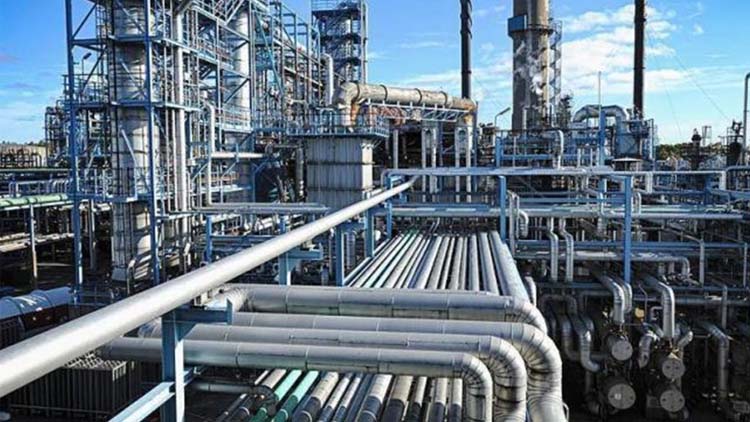
Africa’s oil market in 2026 sits at the intersection of scale and structural inefficiency.
The continent holds about 7–8% of global proven crude reserves, yet captures only a fraction of downstream value, largely because refining capacity has historically lagged production. Total African refinery capacity is estimated at ~3.5–4.0 million barrels per day (bpd), but effective utilisation in many markets remains below 50%, creating one of the widest import dependency gaps globally.
This imbalance translates into a substantial revenue leakage. Africa spends an estimated $60–90 billion annually on petroleum product imports, even as it exports crude oil worth hundreds of billions of dollars.
The mismatch highlights a structural weakness: crude-rich economies remain fuel-import dependent due to ageing refineries, limited complexity, and chronic underinvestment in maintenance and upgrades.
Other News
At the same time, the opportunity set is expanding. Large-scale projects like Nigeria’s Dangote Refinery, Algeria’s integrated Sonatrach system, and Egypt’s expanding refining hubs are beginning to shift the downstream balance.
Demand fundamentals remain strong, with African petroleum consumption growing at roughly 2–3% annually, driven by urbanisation, transport demand, and industrial expansion.
This ranking of the Top 10 largest refineries in Africa in 2026 is therefore not just a list of barrels-per-day figures. It is a snapshot of industrial power, policy direction, and the continent’s gradual shift from import dependence to downstream self-sufficiency, still uneven, but unmistakably in motion.
Kaduna refinery
Capacity-110,000bpd
Set along KM 16 Kachia Road in Kaduna, the Kaduna Refining and Petrochemical Company was built to anchor fuel supply across northern Nigeria. Commissioned in 1980 at 50,000 barrels a day, the complex expanded in stages through the 1980s, adding a second crude train for lubricants and lifting nameplate capacity to 110,000 barrels per day.
At its core are two crude distillation units: a fuels train upgraded to 60,000 barrels per day and a second, 50,000-barrel lube train that has struggled with utility constraints and is currently offline.
The refinery’s configuration reflects late-1970s engineering—leaner on energy use but increasingly dated against modern benchmarks. Supporting units span fluid catalytic cracking, hydrotreating, reforming and sulphur recovery, while a petrochemicals plant commissioned in 1988 produces linear alkyl benzene, a key detergent feedstock.
Despite its scale, output has persistently lagged capacity. Throughput averaged about 40,000 barrels per day in 2002, roughly 36% utilization and has rarely reached peak levels since early expansions.
Periodic shutdowns and infrastructure gaps have constrained operations, even as product slates range from gasoline and diesel to waxes, asphalt and petrochemicals. Following long-term inactivity, rehabilitation efforts are aimed at bringing the refinery back to 60% capacity.
Skikda refinery, Algeria
Capacity-122,000bpd
At Skikda on Algeria’s Mediterranean coast, refining operations begin with a dual-complex footprint. Alongside the main plant sits the Skikda Condensate Refinery II—commissioned in 1980 with a capacity of about 122,000 barrels a day, providing additional processing depth and underscoring the site’s strategic role in the country’s export-driven energy network.
The flagship refinery, one of the largest in North Africa, processes Saharan Blend crude at a nameplate capacity of 335,000 barrels a day, with most output destined for international markets.
Operated by Sonatrach, the complex is undergoing a sweeping upgrade designed to improve efficiency, enhance product quality and expand throughput.
Once completed, crude processing capacity will rise from 15 million tonnes a year to 16.6 million, while overall refining capacity is projected to climb to 45 million tonnes annually, up from roughly 25 million.
Warri Refinery, Nigeria
Capacity- 125,000BPD
In Nigeria’s oil-rich Delta State, the Warri Refining and Petrochemical Company sits at Ekpan near Effurun, forming a critical link in fuel supply to the country’s southern and southwestern markets.
Commissioned in 1978, the complex refinery was designed as a conversion plant with a nameplate capacity of 125,000 barrels a day, processing crude delivered from Escravos, roughly 80 kilometers away.
The facility combines fuels production with petrochemicals, reflecting an earlier push to diversify downstream output.
A petrochemical plant added in 1988 produces polypropylene and carbon black, while core refining units span hydrotreating, fluid catalytic cracking and hydrofluoric alkylation.
Output includes gasoline, diesel, kerosene and LPG, alongside industrial feedstocks.
Operations are supported by extensive on-site utilities, including 125 megawatts of installed power, high-pressure steam systems and upgraded water treatment infrastructure.
Storage capacity allows for about two weeks of crude supply, while a jetty and truck loading systems handle product evacuation, supplemented by plans for rail distribution.
El Nasr Refinery, Egypt
Capacity-131,000BPD
On the western shores of the Suez, the Nasr Petroleum Company stands as one of Egypt’s oldest refining assets, tracing its origins to 1911 under Shell before being nationalized in 1964 under the Egyptian General Petroleum Corporation.
Today, the refinery anchors a key part of Egypt’s downstream sector, producing fuels ranging from gasoline and diesel to kerosene, fuel oil and lubricants, with an estimated capacity of about 131,000 barrels per day.
The complex operates four distillation units with a combined capacity of roughly 6.5 million metric tonnes annually, alongside vacuum units dedicated to asphalt production and a network of gas recovery and treatment facilities. While throughput has varied over time, the refinery’s configuration supports a diverse product slate tailored to both domestic consumption and industrial demand.
Recent investments reflect a broader modernization push. Central to this is the commissioning of a new condensate distillation unit, CDU-4, designed to process over 3,600 tonnes per day of high-quality condensate into lighter, high-value products such as naphtha, jet fuel and diesel.
The project, executed by Petrojet, aligns with Egypt’s strategy to deepen refining capacity and reduce reliance on imports.
Technical oversight has been led by EPROM, acting as the owner’s representative and guiding the project from commissioning through early operations, marking a new phase in the refinery’s century-long evolution.
Mostorod Refinery, Egypt
Capacity-161,000bpd
North of Cairo, in the industrial district of Mostorod, Egypt has quietly built one of its most ambitious downstream upgrades around an aging refinery first commissioned in 1973.
What was once a conventional processing site has been transformed into a modern refining hub through a $4.3 billion redevelopment led by the Egyptian Refining Company in partnership with the Cairo Oil Refining Company.
At the heart of the project is a facility designed to process between 142,000 and 161,000 barrels a day, significantly above the original design capacity of 115,000 bpd.
The upgrade focuses on converting low-value heavy fuel oil into cleaner, higher-value products, aligning with Egypt’s push to modernize its refining slate.
Output now includes Euro V diesel, jet fuel, high-octane gasoline, LPG and naphtha products increasingly in demand both domestically and regionally.
Commissioned between 2019 and 2020, the complex is built around a processing capacity of roughly 4.7 million tonnes per year, using advanced conversion technologies to maximize yield from heavier crude streams.
The integration of ERC’s modern units with CORC’s legacy infrastructure has effectively reshaped Mostorod into a high-complexity refinery system.
Portharcourt Refinery, Nigeria
Capacity-210,000BPD
At Alesa-Eleme on the outskirts of Port Harcourt, Nigeria’s oldest refining hub has evolved into a dual-complex system that reflects both ambition and strain.
The Port Harcourt Refining Company comprises two plants: the original 1960s-era refinery and a newer, more sophisticated facility commissioned in 1988 to serve export markets but later redirected to domestic fuel supply.
The newer plant, often referred to as Port Harcourt II, anchors the complex with a nameplate capacity of 150,000 barrels per day, equipped with conversion units including catalytic cracking, hydrotreating and alkylation to produce cleaner fuels such as lead-free gasoline.
It operates alongside the older 60,000 bpd refinery, bringing combined installed capacity to about 210,000 barrels per day. Together, the facilities produce a broad slate of products, from gasoline and diesel to kerosene, LPG and fuel oil.
Despite its scale, utilization has persistently lagged design. The refinery has rarely exceeded 50% capacity, with output declining through the 1990s as maintenance gaps and manpower constraints weighed on operations. Product yields have also skewed toward lower-value fuel oil over time, diverging from original design expectations.
Ras Lanuf refinery, Libya
Capacity-220,000 bpd
On Libya’s Gulf of Sidra, the Ras Lanuf refinery anchors one of North Africa’s most strategically placed energy complexes. Located in the coastal town of Ras Lanuf, the facility is the country’s largest by nameplate capacity, processing up to 220,000 barrels of crude a day.
Built in 1984 during Libya’s oil expansion era, it was designed as an export-oriented refinery integrated with petrochemical production.
Operated by the Libyan Emirates Oil Refining Company, a partnership between the National Oil Corporation and UAE-based Trasta Energy, the complex produces gasoline, diesel, jet fuel and fuel oil, while also feeding a petrochemical chain that includes ethylene and polyethene.
Sasol Refinery, South Africa
Capacity-250,000-300,000bpd
In South Africa, Sasol operates a unique dual refining system that combines conventional crude processing with coal-to-liquids technology, giving it a combined liquid fuel output capacity of over 250,000 barrels per day.
The Natref refinery, located in Sasolburg and partially owned by Sasol (63.64%), has a capacity of about 108,000 barrels per day.
It is the country’s only inland crude oil refinery and specializes in upgrading imported crude into transportation fuels, including diesel, gasoline and jet fuel. After extensive repairs, Natref returned to full operation in early 2026, restoring a key pillar of South Africa’s fuel supply chain.
Alongside it, Sasol’s Secunda CTL complex at roughly 150,000 barrels per day crude equivalent, remains the world’s largest coal-to-liquids facility. It converts coal into synthetic fuels and chemical feedstocks, forming the backbone of Sasol’s integrated energy and chemicals business and providing significant domestic supply security.
Together, these two assets account for more than 250,000 barrels per day of production capacity, making Sasol one of South Africa’s most important fuel suppliers. The combined system also supports aviation demand, including jet fuel deliveries to OR Tambo International Airport, the country’s busiest air hub.
Skikda Refinery I (RA1K, Skikda), Algeria
Capacity– 356,500 bpd
On Algeria’s Mediterranean coastline in Skikda, the Sonatrach downstream system is anchored by Skikda Refinery I, one of the country’s largest refining assets with a capacity of about 356,500 barrels per day (16.5 million tonnes per year).
Built in 2009 and integrated into a broader industrial complex, it forms a key part of Algeria’s export-oriented refining and petrochemical strategy.
The refinery plays a dual role in domestic supply and export markets. Roughly 52% of output from Sonatrach refineries is directed to the national market, supplying gasoline, diesel, kerosene/jet fuel, fuel oil, bitumen, lubricants and aromatics.
The remaining production is exported, consisting mainly of naphtha, fuel oil, base oils and petrochemical feedstocks, reflecting Algeria’s positioning as both a fuel supplier and regional petrochemical exporter.
Beyond Skikda Refinery I, Sonatrach operates a network of downstream assets across Algeria’s industrial zones. These include RA1G and RA1Z in Algiers, RHMD2 in Hassi Messaoud, and RA1K and RA2K in Skikda, with capacities ranging from 1.1 million to 16.5 million tonnes per year depending on configuration and upgrades.
Dangote Refinery, Nigeria
Capacity-650,000BPD
In Nigeria, the Dangote Petroleum Refinery stands as one of the most ambitious private downstream investments globally, developed by Dangote Industries as a fully integrated refining and petrochemical complex executed under an Engineering, Procurement and Construction (EPC) model, an approach rarely undertaken at this scale by a single owner.
With a capacity of 650,000 barrels per day, the facility is located within the Lekki Free Trade Zone in Lagos, spanning about 2,635 hectares.
The site required extensive land reclamation, with roughly 70% originally swamp terrain. About 65 million cubic metres of sand were used to elevate the site by 1.5 metres, both to stabilize the ground and to mitigate long-term risks from rising sea levels.
Construction activity has also made the project one of the largest industrial job sites in Africa, with over 30,000 workers currently engaged through various contractors.
Once fully operational, the refinery is projected to generate around 100,000 direct and indirect jobs, strengthening its role as a major employment engine for Nigeria’s energy and industrial ecosystem.
Designed to meet stringent global environmental benchmarks, the refinery aligns with standards set by institutions such as the World Bank, US EPA and the EU, ensuring output is positioned for both domestic consumption and international markets.
 Follow Us on Google Discover
Warning: Undefined variable $post_id in /var/www/nairametrics/wp-content/themes/nairametrics/comments.php on line 134
Warning: Undefined variable $post_id in /var/www/nairametrics/wp-content/themes/nairametrics/comments.php on line 134