
 Follow Us on Google Discover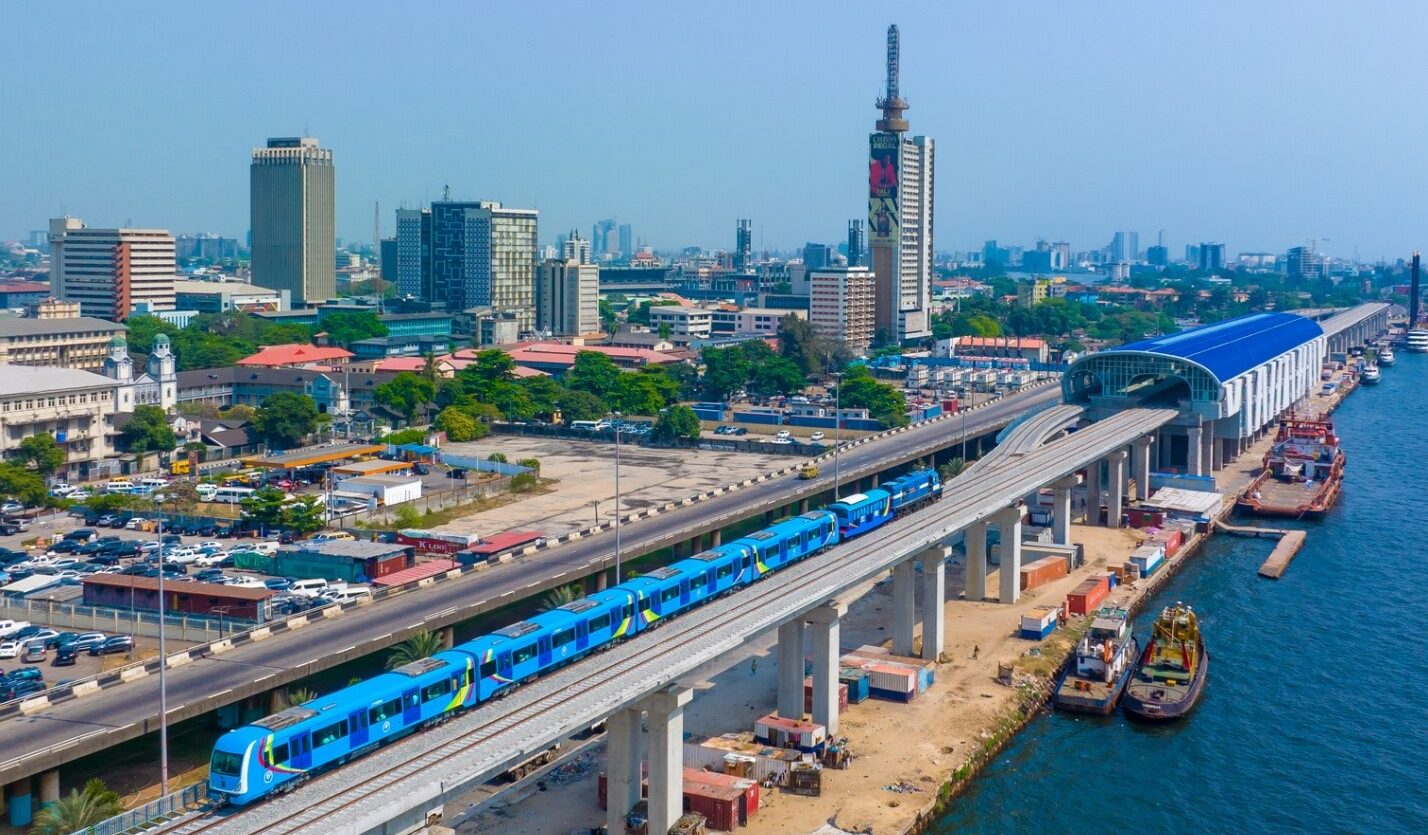
Africa’s population is estimated at 1.7 billion, with 45.6% living in urban areas, according to February data from Worldometer.
As cities expand and economic activity concentrates in urban centres, demand for housing has intensified across the continent.
This shift toward urban living has increased pressure on rental markets. For many households, rent ranks as the first or second largest monthly expense alongside food.
It shapes migration decisions, limits disposable income, and reflects conditions in local housing supply.
Other News
In fast-growing cities, rising rent often signals strong demand, inflationary pressures, or shortages of affordable homes.
This ranking by Nairametrics is based on data from Numbeo, a global cost of living database that compiles user-contributed data from cities worldwide.
The analysis draws from Numbeo’s 2026 Africa Current Rent Index by City report, which compares average rental prices using New York City as the benchmark with an index value of 100.
Under this methodology, a city with a Rent Index of 80 has rental prices about 20% lower than New York City.
The list below highlights the 10 African cities with the highest rental costs in 2026 relative to the global benchmark.
Rabat
Rabat in Morocco ranks tenth among the most expensive African cities to rent a home in 2026, with a Rent Index of 12.4. The city has an estimated population of 2 million people, according to Macrotrends.com.
Rabat’s rental market is concentrated in neighborhoods with strong access to employment, universities, and transport hubs.
- High-demand areas include Agdal, Hay Riad, Hassan-Centre Ville, and Tabriquet in Salé. Well-priced apartments in these neighborhoods typically rent within two to four weeks, with vacancy rates below 10% for quality units.
- Tenant profiles vary by neighborhood: students and young professionals dominate Agdal, government employees and families prefer Hay Riad, mixed tenants favor Hassan-Centre Ville, and budget-conscious families rent in Tabriquet.
- Transport connectivity is a key driver, including tramway access in Agdal and Tabriquet, proximity to the train station in Hassan, and highway access in Hay Riad.
- According to sandsofwealth.com, average long-term monthly rents in Rabat range from 3,500 MAD (about $380) for modest units in Salé to over 20,000 MAD (about $2,180) for premium apartments in Hay Riad or Haut Agdal.
Entry-level two-bedroom units in Tabriquet or outer Salé typically rent for 3,500 to 6,500 MAD (about $380–$710), mid-range two-bedrooms in Agdal and Hassan-Centre Ville go for 7,000 to 12,000 MAD (about $760–$1,310), and premium three-bedroom units in Hay Riad and Haut Agdal command 12,000 to 20,000 MAD (about $1,310–$2,180).
Casablanca
Casablanca in Morocco ranks ninth among the most expensive African cities to rent a home in 2026, with a Rent Index of 12.6. The city has an estimated population of 4.1 million people, according to Macrotrends.com.
- Casablanca is Morocco’s economic capital and the country’s largest real estate market, where apartments dominate the residential landscape.
- Around 75% to 80% of properties are apartments ranging from studios to three-bedroom units, 15% to 20% are high-end apartments in premium districts, and 5% to 10% are villas concentrated in wealthy neighborhoods such as Anfa and Californie.
- Long-term rental demand in Casablanca is stable to moderately positive, fueled by the city’s role as Morocco’s employment center and the high price-to-income ratio that encourages renting.
Tenants include young professionals in finance, services, and tech, corporate relocations, university students, and expatriates in premium areas.
The neighborhoods with the strongest rental demand are Racine and Gauthier, Maarif, Ain Diab, Anfa, and areas around Casablanca Finance City.
Pretoria
Pretoria in South Africa ranks eighth among the most expensive African cities to rent a home in 2026, with a Rent Index of 13.0. The city has an estimated population of 3 million people, according to Macrotrends.com.
The residential market in Pretoria is made up of roughly 40% apartments and flats, 35% townhouses and cluster homes in security estates, and 25% freehold houses.
- Apartments and sectional-title units dominate, particularly in areas near universities and the CBD, including Hatfield, Sunnyside, and Arcadia, driven by the city’s large student population and government workforce.
- According to theafricanvestor.com, new-build properties account for about 15% to 20% of listings, concentrated in Hazeldean, Silver Lakes, Mooikloof, and the eastern edges of Moreleta Park, where developers can build estate-style products.
- As of early 2026, long-term rental demand in Pretoria remains steady, with rents rising around 4% year-on-year and vacancy rates tight in prime areas.
The main tenants are students, government workers, and young professionals seeking proximity to universities, offices, and business hubs.
Neighborhoods with the strongest demand include Hatfield, Brooklyn, Menlo Park, Lynnwood, and parts of Sunnyside.
Johannesburg
Johannesburg, South Africa, ranks seventh among the most expensive African cities to rent a home in 2026, with a Rent Index of 14.0. The city has an estimated population of 6.6 million, according to Macrotrends.com.
- Johannesburg’s housing market is made up of roughly 45% sectional title properties (apartments and townhouses), 40% freestanding houses, and 15% cluster homes and security estates, with sectional units dominating northern suburbs such as Sandton, Rosebank, Fourways, and Randburg due to strong demand for secure, lock-up-and-go living.
- According to theafricanvestor.com, new-build properties represent about 10–15% of listings, mainly concentrated in Midrand, Fourways, Rosebank, and Sandton, while Maboneng, Braamfontein, and parts of Melville continue to see gentrification.
- As of early 2026, average monthly rents are about R6,500 ($360) for a studio, R9,500 ($530) for a one-bedroom, and R13,000 ($720) for a two-bedroom apartment.
Average rents are around R165 per sqm monthly ($9 per sqm), ranging from R130–R220 per sqm ($7–$12 per sqm) depending on location, while a secure one-bedroom in Sandton or Rosebank typically rents for R10,000–R13,000 ($560–$730) per month.
Windhoek
Windhoek in Namibia ranks sixth among the most expensive African cities to rent a home in 2026, with a Rent Index of 15.0. Steady demand and limited premium housing supply continue to support rental prices.
- Windhoek has an estimated population of 528,000, according to Macrotrends.com.
- As the country’s capital and economic center, it attracts families, professionals, expatriates, and long-term residents seeking stability, infrastructure, and quality living conditions.
- The city offers townhouses, detached and semi-detached houses, and larger villas in secure residential areas. Rental prices vary by location, property size, security features, and proximity to schools and services.
Prominent residential neighborhoods include Academia, Auas Hills Nature Estate, Avis, Brakwater, Elisenheim, Eros, Finkenstein, Hochlandpark, Klein Windhoek, Kleine Kuppe, Olympia, Pioniers Park Ext 1, and Windhoek Central. Premium areas such as Auas Hills Nature Estate and Klein Windhoek command higher rents, while established suburbs offer mid range options.
Kigali
Kigali in Rwanda ranks as the fifth most expensive African city to rent a home in 2026, with a Rent Index of 16.1. Strong demand and limited prime housing keep rents high.
- Kigali has an estimated population of 1.7 million, according to the National Institute of Statistics of Rwanda, with an average density of 2,401 inhabitants per km².
- The city covers 730 km² and comprises three districts: Gasabo, Kicukiro, and Nyarugenge. Kicukiro is the densest at 2,944 inhabitants per km², while Gasabo is the least dense at 2,056 inhabitants per km².
- The housing market is balanced but competitive, with low vacancy in prime neighborhoods. Checks on the city’s rental prices show that in Kicukiro, Kigarama, a three-bedroom duplex can rent for 1,750,000 RWF per month (≈ $1,197 USD), while a studio apartment in Gasabo goes for around 600,000 RWF per month (≈ $410 USD). Demand is driven by expatriates, professionals, and relocating families.
Key rental neighborhoods include Kiyovu, Nyarutarama, Gacuriro, Gasabo, Kicukiro, and Nyarugenge, where apartments and houses remain highly sought after.
Addis Ababa
Addis Ababa in Ethiopia ranks as the fourth most expensive African city to rent a home in 2026, with a Rent Index of 20.9. Rapid urban growth and strong demand continue to push rents higher.
Addis Ababa has an estimated population of 6.2 million, according to Macrotrends.com.
- Long-term rental demand is steady, supported by the city’s role as Ethiopia’s economic hub and headquarters for the African Union and international organizations.
- Vacancy rates are low, 4–7 % for mid-market rentals and 8–12 % for furnished expat apartments.
- Gentrifying neighborhoods include Kazanchis, Piassa, Arada, and parts of Bole, showing redevelopment, new commercial formats, and renovation pressures.
- Average gross rental yields are around 7.5 %, with smaller apartments exceeding 9 % and net yields near 5 % after taxes and maintenance, according to TheAfricanvestor.com.
- Prime areas like Bole, Old Airport, and CMC command the highest rents, while studios and one-bedrooms deliver the strongest yields.
Tenants include expatriates, young professionals, and relocating families. Key rental neighborhoods are Bole, Old Airport, CMC, Kazanchis, Piassa, and Arada.
Cape Town
Cape Town in South Africa ranks as the third most expensive African city to rent a home in 2026, with a Rent Index of 22.2. Limited housing supply and strong demand keep rents high.
Cape Town has an estimated population of 5.1 million, according to Macrotrends.net.
- The rental market is tight, with vacancy rates around 2–4 %, lower than the national average of 5.4 %, giving landlords strong leverage, according to TheAfricanvestor.com.
- Well-priced apartments in Sea Point or Green Point rent within 7–14 days, while overpriced luxury units can sit for 45 days. Backup power systems like inverters or solar setups command rent premiums.
- Rents grew 5–7 % year-over-year in 2025. Atlantic Seaboard neighborhoods such as Camps Bay and Clifton have two-bedroom rents above R35,000/month (≈ $2,185 USD), more than double mainstream suburbs like Parklands.
- Young professionals typically pay R11,000–R18,000/month (≈ $686–$1,123 USD) for one-bedroom apartments in Gardens, Oranjezicht, or Woodstock. Expats cluster in Sea Point, Green Point, and the City Bowl.
Furnished rentals are common in premium nodes. Key neighborhoods with strong long-term rental demand include Sea Point, Green Point, City Bowl, Gardens, Oranjezicht, Woodstock, and the Southern Suburbs.
Abidjan
Abidjan in Ivory Coast ranks as the second most expensive African city to rent a home in 2026, with a Rent Index of 23.3. Strong economic growth continues to drive housing demand.
- Abidjan has an estimated population of 6.3 million, according to World Population Review. International companies, a growing middle class, and regional investors are increasing demand faster than supply, especially in central districts.
- According to TheAfricanvestor.com, a studio rents for around 120,000 XOF/month (≈ $214 USD), while two-bedroom units cost 300,000–600,000 XOF/month (≈ $535–$1,070 USD).
- Average rent per square metre is 5,500 XOF (≈ $10 USD), rising to over 8,000 XOF (≈ $14 USD) in premium buildings. The gap between high-end and budget areas can reach 300 %.
- Vacancy rates for mid-market rentals are low at 4–6 %, with units typically leased within 20–45 days.
Expats cluster in Zone 4 and Cocody Riviera, paying 20–40 % premiums for furnished units. Rent growth in 2026 is projected at 4–7 %, while landlords face property taxes of 12–15 %.
Key residential areas include Cocody-Danga, Bingerville, Riviera Palmeraie, Yopougon, Plateau Dokui, and Abobo Baoulé.
Lagos
Lagos ranks as the most expensive African city to rent a home in 2026, with a Rent Index of 23.4, according to Numbeo. The ranking reflects sustained pressure in its rental market amid rising urban demand.
- Lagos, Nigeria’s commercial hub, has an estimated population of 17.8 million people, according to World Population Review.
- Rapid population growth has outpaced housing supply, leaving the state with a shortage of residential leases. The gap has widened due to increased adoption of short-term let apartments and stalled projects linked to rising construction costs and financing constraints.
- Rents have risen sharply in recent years. Edala Development’s Lagos Residential Market Report 2025 shows that two bedroom apartments in Gbagada increased from N600,000 in 2020 to N2.6 million in 2025.
- In Lekki Phase 1, average rents for similar units climbed to N8.5 million, up 183% since 2020.
The state’s land area has expanded from 3,577 to about 4,050 square kilometres through reclamation projects undertaken mainly for real estate development.
However, the government recently suspended all reclamation activities, citing environmental and social risks.
 Follow Us on Google Discover
Warning: Undefined variable $post_id in /var/www/nairametrics/wp-content/themes/nairametrics/comments.php on line 134
Warning: Undefined variable $post_id in /var/www/nairametrics/wp-content/themes/nairametrics/comments.php on line 134