
 Follow Us on Google Discover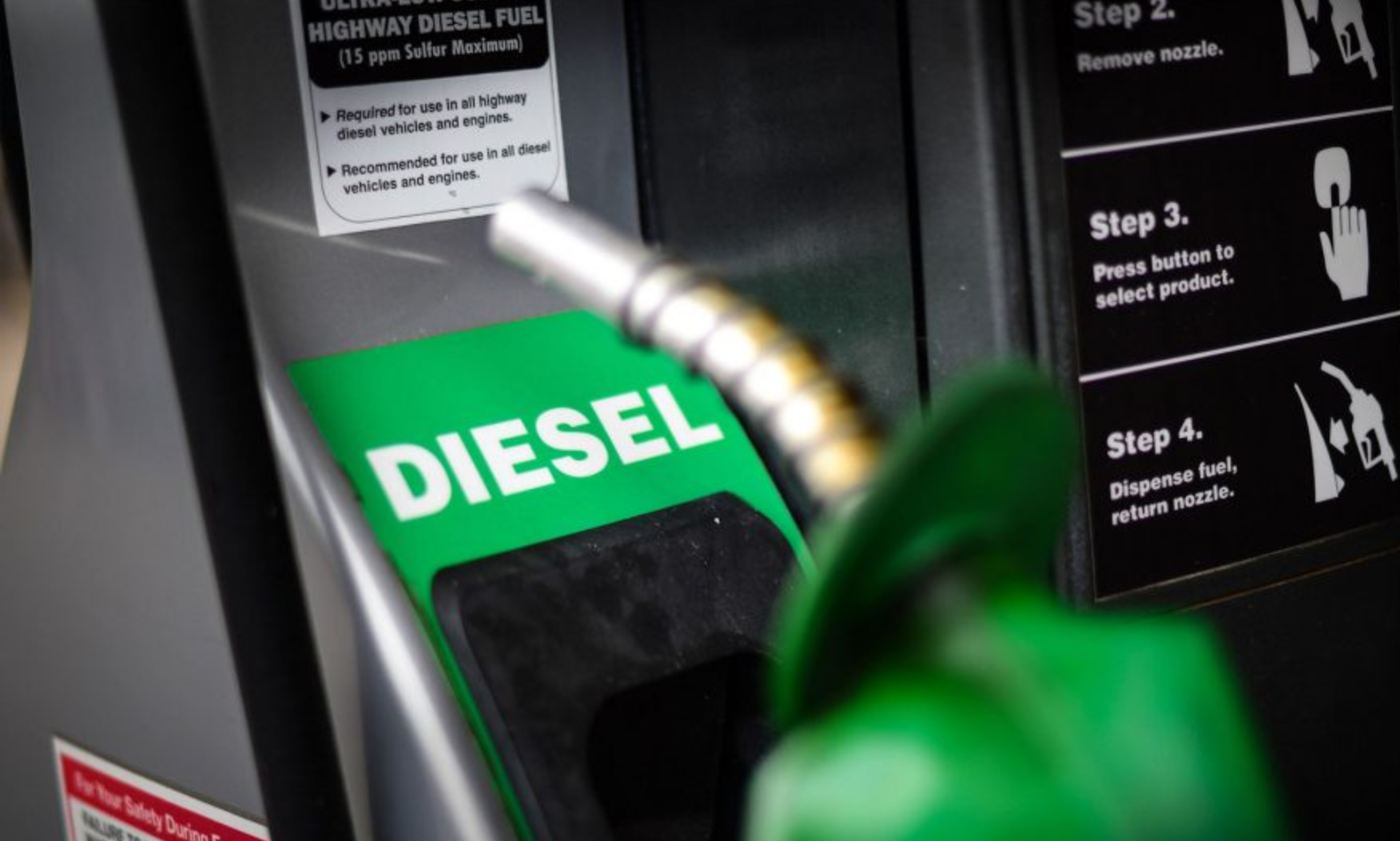
New data released by Global Petrol Prices has ranked the African countries with the lowest diesel pump prices per liter as of February 2026, highlighting the continued impact of fuel subsidies, domestic refining capacity, and currency policies across the continent.
The latest update shows that North African and oil-producing nations dominate the list, with strong government price controls and energy subsidies helping to keep diesel costs significantly below global averages.
At the top of the ranking is Libya, where diesel remains heavily subsidized and sells for just $0.024 per liter — the lowest recorded price in Africa and among the cheapest worldwide. The country’s state-backed pricing structure continues to shield domestic consumers from international market fluctuations.
Second on the list is Algeria at $0.240 per liter, followed by Egypt at $0.374. Both countries maintain structured fuel pricing frameworks supported by state energy revenues and subsidy mechanisms.
Other News
Oil-producing Angola ranks fourth with diesel priced at $0.436 per liter, benefiting from domestic production and regulated distribution channels.
Here are the top ten African countries with the cheapest diesel prices per liter as of February 2026:
Gabon — $1.044 per liter
Gabon rounds out the list with diesel priced at roughly $1.044 per liter. As an oil-producing nation, Gabon has access to crude, but its relatively small refining sector limits domestic processing capacity. The government uses a blend of modest subsidies and regulated pricing to maintain fuel affordability without imposing excessive fiscal strain.
Gabon’s pricing also reflects broader economic diversification challenges: while oil revenues play an outsized role in national income, ensuring sustainable fiscal management while keeping energy affordable remains an ongoing policy focus.
Liberia — $0.914 per liter
Liberia, at $0.914 per liter, represents one of the higher fuel prices among the cheapest diesel markets in Africa. The country is almost entirely dependent on imported refined petroleum products, meaning prices are heavily influenced by global diesel markets, shipping costs, and fluctuations in foreign exchange.
While government regulation helps avoid extreme price volatility, Liberia’s lack of local refining and small market size limit its ability to control prices more aggressively. Logistics infrastructure costs also contribute to higher consumer prices relative to oil-producing peers.
Tunisia — $0.775 per liter
Tunisia’s diesel price of around $0.775 per liter results from a partial subsidy system combined with market pricing policies. Like several North African counterparts, Tunisia has subsidized energy to keep daily transport and logistics costs manageable. However, fiscal pressures have prompted gradual subsidy reductions in recent years to reduce budget deficits.
As a result, fuel prices have crept upward, though they remain relatively low compared with many global averages. Tunisia continues to weigh the socio-economic impacts of further subsidy reforms, particularly given domestic political considerations.
Ethiopia — $0.750 per liter
Ethiopia’s diesel price of $0.750 per liter sits above many oil-producing nations, primarily because the country is heavily dependent on imports for refined petroleum products. State controls on pricing — rather than direct subsidies — have historically mitigated sharp spikes, but the cost of importation, logistics, and foreign exchange pressures make fuel pricing volatile.
Limited refining capacity and dependency on imported diesel mean that currency fluctuations directly impact pump prices.
Despite efforts to regulate and stabilize prices, Ethiopia’s diesel cost reflects broader challenges in balancing affordability with sustainable energy procurement.
Nigeria — $0.670 per liter
Nigeria, Africa’s largest crude oil producer by volume, sells diesel at roughly $0.670 per liter, a relatively low price considering global benchmarks.
However, this figure comes after the removal of long-standing fuel subsidies in recent years, a shift that ended decades of state-bearing pricing and aimed to stimulate market efficiency and reduce fiscal burdens.
The subsidy removal initially sparked contentious economic debate, with inflationary pressures impacting the broader economy.
To support its burgeoning refining sector — including Africa’s largest refinery at Dangote — Nigeria has introduced a 15% import duty on petroleum products, a bid to encourage domestic refining and reduce reliance on imports. This policy may gradually reshape local fuel pricing as domestic supplies become more available and competitive.
Sudan — $0.656 per liter
Sudan’s diesel price of $0.656 per liter reflects a mixture of domestic policy and exchange rate dynamics. The country’s economic environment has been volatile due to political transitions, inflationary pressures, and currency challenges.
Sudan does not have large crude oil reserves of its own and depends partly on imported refined products, which makes its fuel price sensitive to global diesel markets and currency depreciation.
Efforts to manage prices often involve balancing the availability of foreign currency for imports with domestic affordability, a challenge that continues to influence fiscal and monetary policy decisions.
Angola — $0.436 per liter
Angola, an oil-producing nation, currently sells diesel at about $0.436 per liter. Its low prices are sustained by a combination of domestic crude output and targeted subsidies. Despite being resource-rich, Angola has faced pressure to reform its fuel pricing framework to ease fiscal burdens and balance budgets.
In 2025, proposed fuel price increases sparked public protests, illustrating how sensitive fuel pricing is for ordinary citizens.
The government subsequently softened its approach to adjustments to preserve social stability, highlighting the political complexities of balancing economic reforms with consumer affordability.
Egypt — $0.374 per liter
Egypt’s diesel pump price of $0.374 per liter reflects a complex balance between state subsidies and gradual market reforms. Historically, Egypt subsidized energy heavily, but in recent years it has engaged in broader economic restructuring under agreements with the International Monetary Fund (IMF), which has encouraged the gradual reduction of subsidies to alleviate fiscal pressures.
Although the government has increased various fuel prices to meet reform targets, diesel remains subsidized to some extent, especially compared with many global markets, because it is vital for transportation and logistics. The challenge for Egypt is to rationalize subsidies without triggering significant inflation, particularly given ongoing pressures on foreign exchange reserves and economic growth.
Algeria — $0.240 per liter
Algeria’s diesel price remains among the lowest in Africa due to its substantial oil and gas reserves and long-standing fuel subsidy regime. Government price controls aim to keep energy affordable for households and businesses, effectively insulating domestic markets from global volatility.
Algeria also benefits from robust infrastructure that supports the extraction and distribution of hydrocarbons. This has allowed the country to regulate pricing with less fiscal strain than some peers.
However, maintaining subsidies comes with fiscal costs, and Algerian authorities have periodically debated partial subsidy reforms to balance national budgets without spiking pump prices. These considerations remain central to economic planning as the nation navigates global energy demand changes.
Libya — $0.024 per liter
Libya continues to register some of the world’s lowest diesel prices, selling diesel at approximately $0.024 per liter.
This ultra-low price is primarily sustained by deep government subsidies and the sheer scale of the nation’s crude oil reserves. Despite decades of political instability and divided governance, the state has maintained heavily subsidized fuel to shield consumers from global market fluctuations.
However, subsidized diesel has also fostered a large fuel smuggling network across the region — with reports suggesting billions in revenue are lost yearly as cheap subsidized fuel is trafficked abroad.
While domestic drivers benefit from low pump prices, Libya’s limited refining capacity means it still depends on imports of refined products to meet internal demand. In light of profiteering and smuggling, officials have recently moved to adjust crude-for-fuel swap deals and refine how fuel imports are managed.
The data indicates a clear pattern: countries with either strong crude oil reserves, refining capacity, or long-standing subsidy regimes tend to maintain lower diesel prices. In contrast, import-dependent economies typically record higher pump prices due to shipping costs, currency pressures, and deregulated pricing systems.
 Follow Us on Google Discover
Warning: Undefined variable $post_id in /var/www/nairametrics/wp-content/themes/nairametrics/comments.php on line 134
Warning: Undefined variable $post_id in /var/www/nairametrics/wp-content/themes/nairametrics/comments.php on line 134