
 Follow Us on Google Discover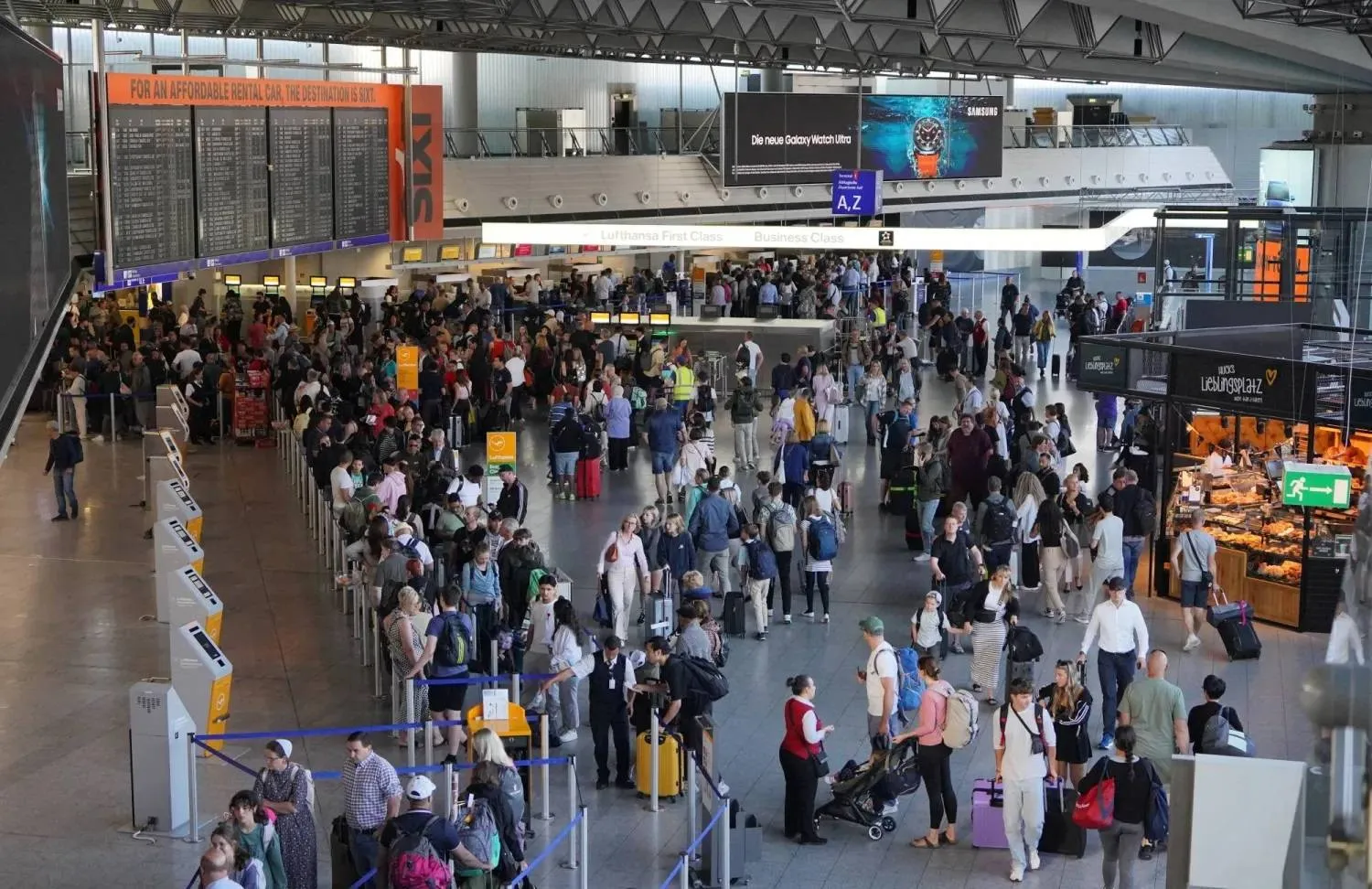
A cyberattack on a key aviation systems provider has disrupted check-in and boarding operations at several major European airports, causing flight delays and cancellations on Saturday.
According to a Reuters report, the attack targeted Collins Aerospace, a subsidiary of RTX, which supplies software used by airlines and airports worldwide.
London’s Heathrow Airport, Europe’s busiest, confirmed that Collins Aerospace’s systems had experienced a technical issue that was affecting passenger processing.
Brussels and Berling airports also affected
Brussels Airport and Berlin Airport also reported being impacted, with both warning travelers of long delays and possible cancellations.
Other News
According to Brussels Airport, the incident occurred on Friday night and rendered automated check-in and baggage systems inoperable, forcing staff to switch to manual processing.
“This has a large impact on the flight schedule and will, unfortunately, cause delays and cancellations of flights,” the airport said in a statement.
Berlin Airport issued a similar advisory, cautioning passengers about longer waiting times at check-in as efforts continued to restore normal operations.
RTX confirms cyber-related disruption
RTX, Collins Aerospace’s parent company, acknowledged the issue in an emailed statement, describing it as a “cyber-related disruption” at selected airports.
The company clarified that the impact was limited to electronic customer check-in and baggage drop but could be mitigated through manual procedures.
“We are working to fix the issue as quickly as possible,” RTX said.
However, despite the widespread disruption, Frankfurt Airport, Germany’s busiest, and Zurich Airport reported that they had not been affected.
Airlines respond
Among major carriers, EasyJet said its flights were operating normally and that it did not expect the disruption to affect its weekend schedule. Ryanair and British Airways owner IAG did not immediately comment on the situation.
- Meanwhile, Poland’s deputy prime minister and digital affairs minister, Krzysztof Gawkowski, said there were no signs that Polish airports had been impacted by the cyberattack.
- Passengers traveling from the affected airports have been advised to check directly with their airlines before heading to the airport, as delays and cancellations are expected to continue until systems are fully restored.
What you should know
Over the past year, aviation infrastructure has increasingly become a target for cybercriminals, hacktivists, and state-sponsored actors.
- In July 2025, Russia’s Aeroflot suffered a major cyberattack that forced the cancellation of over 100 flights. The breach disrupted not just local operations, but also international routes, exposing vulnerabilities in how airline IT systems are managed and protected.
- Earlier this year, airports around the world have reported disruptions from hacktivist denial-of-service (DDoS) attacks and ransomware threats.
For instance, a major airport in Kuala Lumpur was forced to switch to manual operations after a ransomware attack that took down critical systems for several hours.
 Follow Us on Google Discover

Warning: Undefined variable $post_id in /var/www/nairametrics/wp-content/themes/nairametrics/comments.php on line 134
Warning: Undefined variable $post_id in /var/www/nairametrics/wp-content/themes/nairametrics/comments.php on line 134