
 Follow Us on Google Discover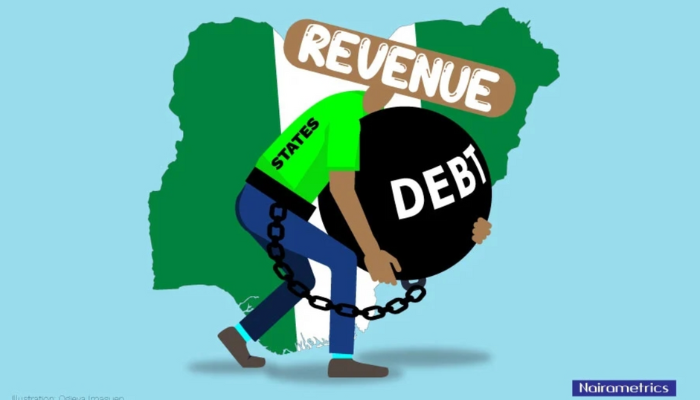
Story highlights
- Finance commissioners of three Nigerian states—Ekiti, Cross River, and Ogun—have expressed concerns over the rising costs of foreign debt service due to severe foreign exchange volatility.
- They also expressed concerns over the unsustainable debt servicing costs and the impact on their ability to fund essential capital projects.
- The Federal Government, acknowledging these challenges at a recent Federal Account Allocation Committee (FAAC) meeting, is considering these proposals amidst ongoing discussions at the National Economic Council (NEC) to address broader economic issues.
At least three Nigerian states Ekiti, Cross River, and Ogun have expressed concerns over the rising costs of foreign debt service due to severe foreign exchange volatility.
The states who were represented by the finance commissioners proposed ways that the government can ease some of the financial burdens stating that statutory deductions have negatively affected their finances.
This call is part of their efforts to mitigate the heightened debt service burdens that have significantly reduced their monthly financial allocations from the federation account.
Other News
One of the states called for a possible suspension of the debt repayment for multilateral loans be suspended to ease their cash flow.
Details of these proposals were highlighted in the minutes of the Federal Account Allocation Committee (FAAC) meeting held in March 2024.
The minutes were adopted at the subsequent meeting on April 19, 2024, at the Federal Ministry of Finance headquarters. A copy of the minutes was obtained by Nairametrics.
States’ finance commissioners raise concerns
The Commissioner of Finance of Ekiti State, Akintunde Oyebode, noted that the financial strain caused by rising exchange rates has escalated the costs of foreign debt repayments.
- He advocated for an extensive discussion on exchange rates and multilateral financing to address these challenges.
- Oyebode also noted that significant deductions from the statutory revenue for savings have drastically reduced state balances.
Similarly, the Commissioner of Finance of Cross River State, Michael Odere, expressed fears about the states’ ability to fund capital projects due to reduced revenues.
- He suggested a suspension of certain deductions, including those for multilateral loan repayments, especially when distributable revenue is low.
- Odere also proposed that pre-FAAC stakeholder meetings be arranged to better manage financial allocations during periods of fiscal shortfall.
The Commissioner of Finance of Ogun State, Dapo Okubadejo, called for the redirection of the N200 billion previously earmarked as savings back into the federation account for redistribution among the states.
- He noted that doing this will help to alleviate financial distress and support necessary infrastructural developments, enabling the states to better handle the unpredictability of foreign exchange rates impacting multilateral financing.
The minutes of the meeting read:
“The HCF, Ekiti State observed that there had been significant increases in the amounts deducted from the Statutory Revenue of the States for repayment of foreign loans due to the rising exchange rate. He therefore, suggested the need for extensive discussion on exchange rates in relation to multilateral financing in order to address the issue. Furthermore, he raised concerns on the amount deducted as savings from the revenue for the month, and noted that the balances of the Sub-nationals had reduced tremendously as a result.
“The HCF, Cross River State expressed fear that the States might not be able to fund capital projects as a result of reduction in revenue. He advised that in view of the tight financial situation of the Sub-nationals, some of the proposed deductions should be suspended including repayment for multilateral loans. He also advised that whenever the total distributable revenue was low, a pre-FAAC meeting should be arranged with stakeholders to have a discussion on ways to manage the situation.
“The HCF, Ogun States on his part, proposed that the N200 billion set aside as savings should be returned to the Federation Account for distribution to the beneficiaries. On the issue of multilateral financing, he proposed that a system should be put in place to effectively address issues associated with foreign exchange volatility. The HCF, Enugu State noted that if more funds were made available to States for infrastructural development, the revenue earnings of the States would increase.”
FG’s response
The Minister of Finance, Olawale Edun, who was also the Chairman of the meeting, responded to these concerns, noting that discussions regarding foreign exchange, interest rates, and other economic challenges are ongoing at the National Economic Council (NEC).
He urged the states to relay their concerns through their chief executives/ governors for thorough consideration.
Edun also emphasized the need for strengthened cooperation between monetary and fiscal authorities to foster national development in these economically challenging times.
What you should know
The Debt Management Office (DMO) recently disclosed the total external debt stock of the 36 states and the Federal Capital Territory (FCT) reached $4.61 billion by December 31, 2023, from $4.46 billion recorded in the previous year.
In one year, the foreign debt of the 36 states and the FCT increased marginally by about 3.36% or $150 million.
- Nairametrics recently reported that the naira value of the total external debt of Nigeria’s 36 states and Federal Capital Territory (FCT) increased by 23.76% from N3.350 trillion to N4.146 trillion between June 2023 and December 2023.
- Ekiti, Cross River, and Ogun are among the top 10 Nigerian states with the highest foreign debt stock as of December 31, 2023.
- External debt servicing cost N120.01 billion from states’ allocation in 2023. This was an increase of 54% (or N42.01 billion) from N78 billion deducted in 2022.
- Recently, the Kaduna State Governor, Sen. Uba Sani lamented the rising cost of servicing the state’s external debt stock, noting that he was paying back almost triple what was borrowed by the previous administration of Malam Nasir El-Rufai. According to him, the huge debt inherited from his predecessor has resulted in significant deductions from the state’s monthly FAAC allocation, thereby diverting resources meant for critical sectors towards debt service.
- The spike in the naira value of sub-national’s external debt and debt servicing stems from the significant weakening of the naira.
- In the six months between June 30 and December 31, 2023, the naira dipped in value by 17.92% closing for the year 2023 at 11/$from N769.25/$ as of June 30, 2023.
- Naira currently trades between N1,300 and 1,400, and this is expected to increase the naira cost of states’ external debt servicing.
Note: This article has been updated to accurately reflect that only one state has requested a suspension of debt repayment on multilateral loans.
 Follow Us on Google Discover

Warning: Undefined variable $post_id in /var/www/nairametrics/wp-content/themes/nairametrics/comments.php on line 134
Warning: Undefined variable $post_id in /var/www/nairametrics/wp-content/themes/nairametrics/comments.php on line 134