
 Follow Us on Google Discover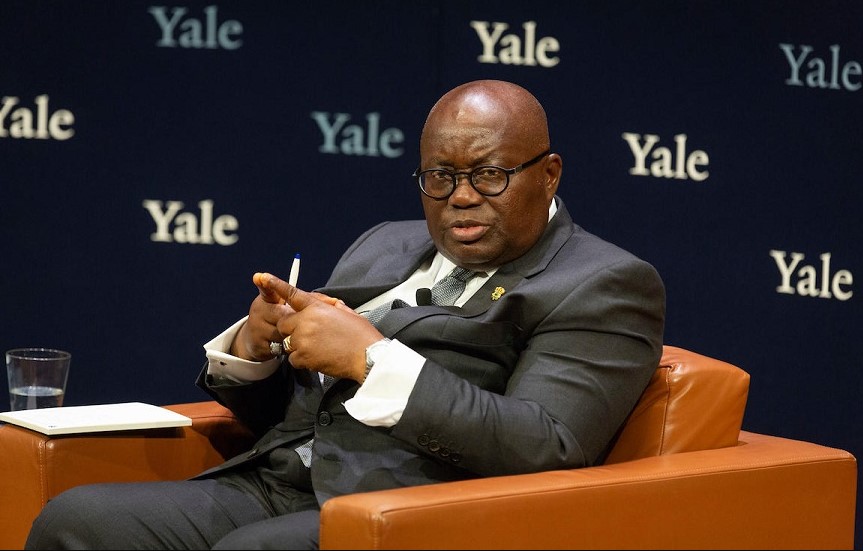
Ghana is actively strategizing and implementing policies and initiatives to advance its power sector to achieve “100% universal energy access” and potentially export electricity to its “big brother” neighbour, Nigeria.
Mr. Hanson Monney, the Head of the Generation and Transmission Unit at the Ministry of Energy in Ghana, conveyed this during his presentation in Lagos on the 2nd Day of the Nigeria Energy Leadership Summit.
Monney highlighted that Ghana has already achieved a remarkable 80% to 85% universal energy access within its borders through robust policy formulation and implementation.
In his words,
Other News
- “So, we are working on all these things to make sure that the power system of Ghana continues to be as good as it is or even better, and then, maybe, we can be exporting more to our big brothers in Nigeria when the grid is finally settled.
- So, ladies and gentlemen, this is an overview of the Ghana power system and challenges.”
This statement comes in the wake of Nigeria, Africa’s largest nation and leading oil producer, experiencing its second national electricity grid collapse, resulting in a complete blackout for homes and businesses.
In contrast, Ghana is actively pursuing various energy options, including grid energy, mini-grids, and solar-dominated renewable energy, to achieve “Universal access to energy by 2024” as directed by the country’s President.
Challenges of Ghana’s electricity industry
Monney acknowledged that achieving universal energy access in Ghana, especially in remote islands, riverside, or lakeside communities, presents significant challenges due to geographical constraints. To address this, he noted,
- “So, now, we are trying to scale our renewable energy access, and that is how we have planned in 2022 to scale up our renewable energy program.”
Tariff problem
One of the foremost challenges in Ghana’s power sector is financial sustainability, as the government grapples with mounting debts and excess capacity procurement.
Monney stated,
- “There is so much debt that the government has to shore up to make sure that the system is afloat because we have procured a lot of excess capacity, which comes with attendant costs. So, these financial challenges require some policy actions to eliminate legacy debts.”
High electricity tariffs are also a significant concern in Ghana, and Monney expressed the importance of making electricity more affordable, especially for industries.
He explained, “We saw that in Ghana historically.
These industries have been subsidizing the residential sector, and it should be the other way around. Industries should remain viable so that businesses can thrive.” Monney indicated ongoing efforts to rationalize tariffs to rectify this issue.
Gas supply challenge
Additionally, Monney highlighted the issue of gas supply security in Ghana and expressed gratitude to Nigeria for consistently supporting their gas supply needs.
He noted that while Nigeria provides gas from the east, more measures are necessary to ensure a consistent fuel supply.
Currently, Ghana is facing an 80-day shutdown of its gas supply, significantly affecting the power sector.
Despite these challenges, Monney affirmed that the Ghanaian government is actively taking steps to address them and continue advancing the electricity sector in the West African nation.
He emphasized Ghana’s holistic approach, involving collaboration among regulators, the private sector, and various stakeholders, and mentioned the existence of an “Integrated Power Sector Master Plan” to consolidate long-term plans for the sector.
 Follow Us on Google Discover
This is a sad news, it’s more like something died in me.
Better wake up! That Ghana whose total economy is beneath Lagos wants to supply naija out of its less than 4k MGW 😆
Ghana is only interested in sending electricity to other countries which they have stable and affordable electricity cost while the exporter country (Ghana) citizens in Ghana are suffering with everyday high cost of electricity and unstable electricity. Please help solve your country electricity crisis first thank you
Ghana and Nigeria need to intensify energy in this sector to liberate the block from economic hardships facing the bloc
Shame, shame, shame.
When will this end?
Nairametrics, there’s a DIFFERENCE between “plan” and mere aspiration…
That we be the option
That we be the good option
This author is a f00l Ghana generates less than 4000mw how will it export what you don’t have??
Ghana has huge electricity capacity presently that they are not signing new power purchase agreement with new investors again. they can’t even meet their obligation with existing PPA they’ve signed. It only makes sense to sell excess capacity to neighboring countries like Togo, Nigeria, Benin and up to Mali and Burkina.
it’s a welcome development as this will form the West Africa Power Pool. Similar to what’s existing in South & Eastern Africa.
There could be a bilateral arrangements between Nigeria and Ghana. where we supply them gas while they provide us power. Not much investment will be required as there is already an existing transmission lines from Nigeria through Benin/Togo to Ghana. same as gas pipeline (WAPIC line)
Ghana must be sure that there should not be lights off in any circumstances before exporting the electricity to anywhere thanks
Warning: Undefined variable $post_id in /var/www/nairametrics/wp-content/themes/nairametrics/comments.php on line 134
Warning: Undefined variable $post_id in /var/www/nairametrics/wp-content/themes/nairametrics/comments.php on line 134