
 Follow Us on Google Discover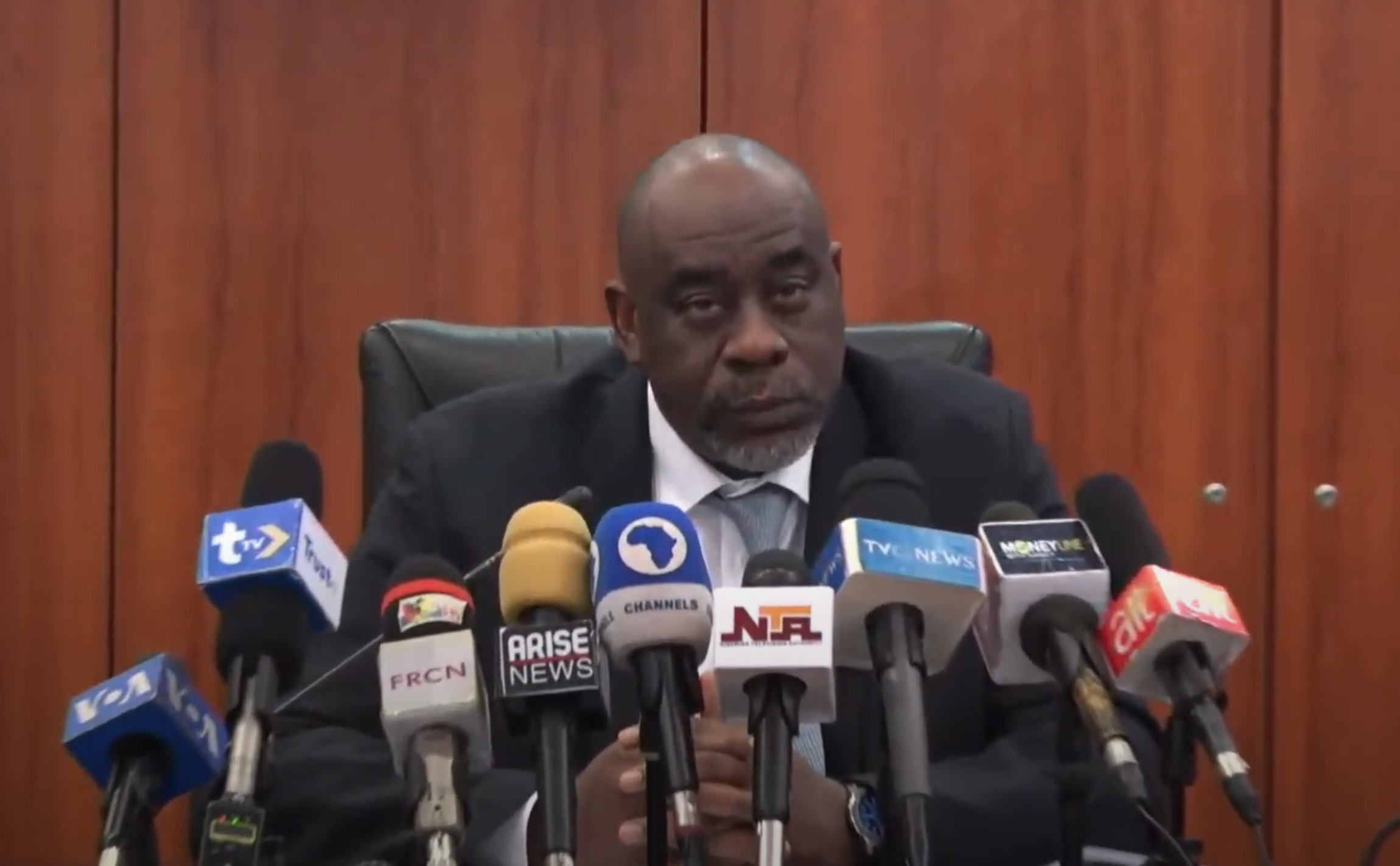
The Central Bank of Nigeria (CBN), has attributed the crash of the naira against the dollar and its inability to manage the foreign exchange market to the diversion of diaspora remittances to the unofficial markets like the parallel.
This is as Nairametrics yesterday reported that the Naira plunged to a record low of N930/$1 at the parallel market with the Investor and Exporter (I&E) window trading at N782.38/$1 as of Wednesday, August 9, 2023, as demand pressure and forex scarcity worsens.
This was made known by the acting Governor of CBN, Folashodun Shonubi, while delivering a Distinguished Personality lecture titled: “Diaspora Remittances and Nigeria Economic Development” for members of the Executive Intelligence Management Course (EIMC) 16 at the National Institute for Security Studies, Abuja.
Shonubi explained that many diaspora remittances came to Nigeria in dollars and were not documented officially, as they end up in the parallel market.
Other News
Diaspora remittances are not in the official system
Shonubi said,
- “With those remittances, the dollars have come in, we know the dollars have come in but we don’t see them in the official system. So, they must be going somewhere and somewhere.”
- “And the challenge with the black market, unofficial market or parallel market or whatever name you want to call it, it is as a result that it is not regulated, and it becomes an easy place to have criminal activities.
- “We investigate bankers, not just bankers, anybody who has committed an offence, the first thing they want to do is to run to the black markets, change it to the dollars because it is less money to carry around.
- “Some of the funding in the black markets are actually from diaspora remittances. That’s why it important we need to know a lot of what’s going on there. We can’t play the sentiment game.
- If we don’t understand the dynamics, we usually go with the literature which does not necessarily work for us.’’
He noted that it would be helpful if Nigeria puts measures in place to control illegal remittances and identify these channels to ensure remittance flows into the proper channels, and harness maximum benefits to grow the economy.
Difficulty in managing the Forex crisis
The CBN boss said the number of inflows coming through many unapproved channels and eventually ending up in the parallel market contributed significantly to Nigeria’s foreign exchange (FX) crisis.
He said,
- “We intend to use more of the banking system too, sending money to Sub-Saharan Africa cost highest because we don’t have masses.
- It would be helpful if we can work together to identify these channels because we just want the flows into the proper channels, there we can get maximum benefits to grow the economy.
- “We talk about black markets, which also create problems.
- Management of foreign exchange market and the efficacy of our policies to manage the exchange rate becomes difficult due to the insignificance of our diaspora remittances which are going to other markets.
- “Today, someone called me privately and said this thing (Naira) has gone up to some levels in the black markets, my question was, what do you want me to do?
- Do I operate in the black markets? I don’t know the basis of pricing in the black markets.
- “The other thing people don’t realize is that, because you don’t have full information, and I will give you an example since we started I&E window.
- We found out that some people would deliberately wait until the last minute and do one transaction of $5,000 and that becomes the closing rate.
- “We can’t do without diaspora remittances. For many countries, that’s their main source of income.”
 Follow Us on Google Discover
This seems like unproductive complaining coming from the CBN, speaking frankly, with no actual attempts to critically and creatively address any of the issues that this current administration is presently dealing with.
If the CBN were genuinely committed, it would simply need to pose and answer two straightforward questions to tackle this matter:
To start, we should ask why the parallel market persists even after the official market has been liberalized. From my perspective, it’s due to their insistence on upholding the restriction of 43 banned items from accessing FX through the official market. This policy effectively creates the opening for the parallel market to emerge. The solution lies in removing all FX constraints for imported goods and instead reinstating the responsibility of trade policy to the federal government through fiscal policy. This should be accomplished through tariff collection and strict customs regulations at Nigeria’s borders—be it on land, air, or sea. Attempting to manage trade policy from the central bank through monetary and FX policy only leads to the kind of distortions we’re witnessing today.
The second question to consider is why both diaspora members and the general Nigerian public still prefer the parallel market over the official one. In my view, it’s because banks have yet to establish a system and a set of procedures that replicate the convenience, speed, and efficiency of buying and selling foreign currencies as seen in the parallel market. Until the CBN and banks manage to match the seamless experience of the parallel market—where a few phone calls, WhatsApp messages, or clicks on a computer screen result in instant trading and settlement of foreign currencies alongside the Naira—retail FX buyers and sellers will naturally gravitate towards the parallel market. This is in contrast to the complicated and sluggish process that commercial banks currently employ for FX requests.
Good analysis. Is it possible some CBN staff and bankers are also profiting from this and not wanting to ease up on these policies?
But, how come Nigeria has a parallel FX market that the CBN can not control? If it’s becoming a threat to Nigeria, why can’t they be scrapped? How many countries of the world have two FX markets in the first place?
I think the BDC operators are too strong for the authorities to deal with. I don’t think anything will change until the BDC operators are brought under control or totally scrapped.
The CBN Governor’s job is certainly not one for an Engineer. It’s one for a PhD Economist. No one should be surprised as to the ongoing outcome of putting a square peg in a round hole. The sad thing is that’s it’s the hoi polloi that must suffer the negative fall outs of such warped executive choices.
I have an imminent overseas trip to make and CBN stopped selling PTA/BTA eons ago now.
Where do I turn to purchase FX? The parallel or black market, of course. Those in charge of our affairs need to not only put on their thinking caps, but also think outside of the box. Managing our foreign exchange is not rocket science.
What do expect from this government, how will they put on their thinking cap, when someone that read engineering is the one incharge of your economy, what do you expect, he said he doesn’t have solution to all the issues he raised.
Hmmm. You just stated one of the major problems facing Nigeria economy. It’s a reflection of incompetence on the part of those in charge of governance.
If banks “establish a system and a set of procedures that replicate the convenience, speed and efficiency of buying and selling foreign currencies as seen in the parallel market” then how would the bank managers make money? They know what to do but greed and absence of CBN controls empower them to continue to make easy a millions daily
Everything is difficult in Nigeria
So what do you do? Bite the bullet and scrap the parallel market (BDCs) in order to halt the diversions.
please reason with me. I think the CBN should encourage an easy opening, useage and zero or less charges on domiciliary accounts by Nigerians in Diaspora in order to track Diaspora remittance. It’s should also understand, float or encourage transfer applications directly to dorm accounts.
They can even float or encourage online banks, like the Monzo, revolut etc
We have too many blackmarket transfers abroad that are not captured, hence we have excess naira in circulation and fewer entrance of dollars. I am not an economist but I don’t know if I make any sense
Remove FX restrictions, match the ease with which one obtains FX from so called black markets.
I think the job is on the desktop, why does CBN not admit to knowing exactly what to do?
Why are constitutional powers evasive about correcting anomalies? The other day Mr president removed pms subsidy, even though it is clear our porous borders are used to smuggle away the product. Now the inflated pms prices are further threatened by FX prices.
FX remittances aren’t national products even, why is govt so concerned? Best assume it is not there, then improve efficiency in normal FX operations.
This might seem crazy but all over the world, governments are made to empower and regulate a system by all means even if it runs at heavy loss. Since the CBN governor claims the fall of the naira is as a result unofficial diaspora remittance, which make sense to me because everyone wants to maximise profit through a seamless means, then the cbn can do the unthinkable by bringing out large sum of naira and contract people to buy off/mop up dollars from the black market on daily basis for a good number of days in other to stalk it in their vault with enough dollar bill, especially from Abuja and Lagos parallel markets which happen to be the price determinants. When the CBN feels it has enough in hand. Then they can start selling at their own discretion to favour the naira, as well as removing all the restrictions place on the list of people eligible to get the dollar just the way the parallel market operate. I feel if this is maintained for a while, the patronage of parallel market operators will reduce to a greater extent which will force them to sale if not the same but very close to cbn rate. My take though.
Sounds crazy but feels reasonable and practical. Oil-stained hands can’t washoff oil stains on light linen.
All the comments made here are some of what CBN should contact its people to pay close attention to.
We have always had misplaced fiscal and monetary policies in the Country. How do you explain policies that had no intention of being executed in the first place.Allow the market go really free for all remove all restrictions and allow the institutions that can implement this policies guide and direct them to the letter without fear or favour we are not ready when we are ready we definitely block all loopholes and sinking pots everywhere.we are just being taken for a ride
I want to believe that the CBN has the capacity and the power to issue and revoke licenses of BDCs . In my own best opinion is for the CBN to revoke licenses of BDCs who do not comply with the policies of the present Nigerian government. The total number of BDCs operating is too much for the CBN to curb. To start with,the total BDC operators should be drastically reduced to at least 100 which would be later reduced subsequently.
Operations of these BDCs should be regulated by the CBN so as to fit into the policies of the government.
You want millions of Nigerians to source forex from 100 people? Even when banks can’t even meet up with the demand? Something is really not right in your view.
Warning: Undefined variable $post_id in /var/www/nairametrics/wp-content/themes/nairametrics/comments.php on line 134
Warning: Undefined variable $post_id in /var/www/nairametrics/wp-content/themes/nairametrics/comments.php on line 134