
 Follow Us on Google Discover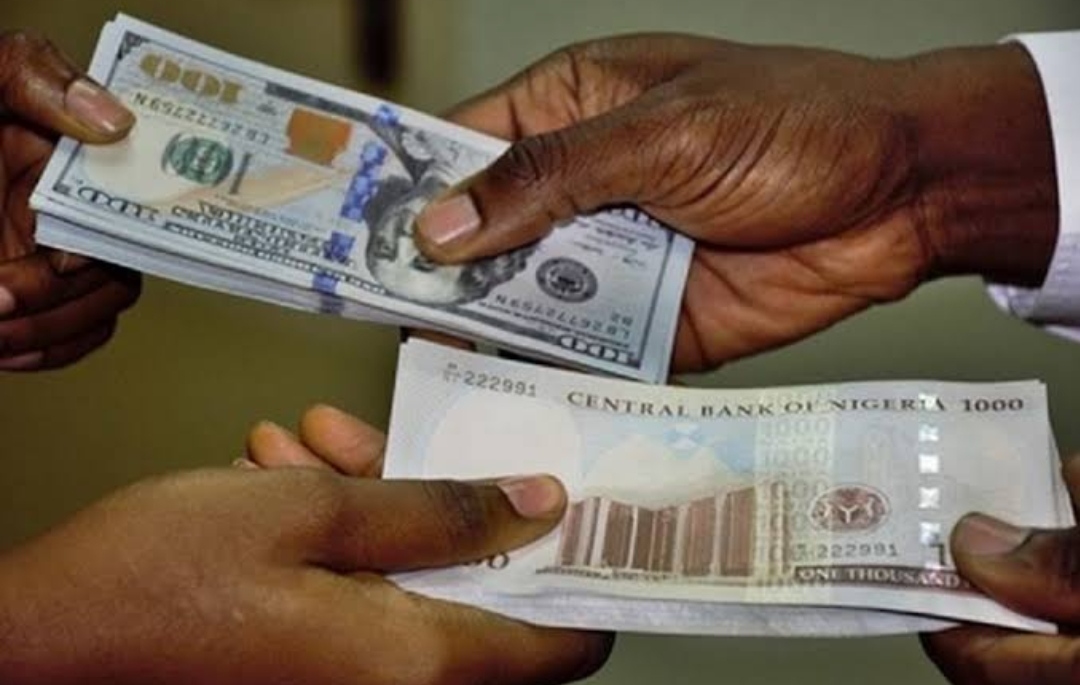
As of last Friday, Nigeria’s official exchange rate is facing a significant divergence from parallel market rates, inching close to N100/$.
The I & E FX window closed at N777.82/$, while BDC and P2P prices remained stagnant at N870/$.
The widening gap between the Naira’s official exchange rate and the parallel market rate is the widest seen since the currency’s unification, largely driven by an insatiable demand for the US dollar that surpasses the available supply.
Initially, the Central Bank of Nigeria (CBN) hinted at allowing free trade until the currency achieved a market-relevant level.
Other News
However, market participants are now expressing concerns that the high demand for foreign exchange might lead to further depreciation of the local currency.
Several factors contribute to this predicament, including a significant influx of foreign currency from non-oil sources, such as remittances, tourism, and non-oil exports, into the black market.
This exacerbates the dollar shortage issue.
Nigeria’s failure to meet the OPEC quota also plays a vital role in determining the value of the Naira, as oil remains a major contributor to the country’s foreign currency earnings, but oil theft has led to declining oil revenues.
Nigeria’s crude oil production has fallen short of OPEC’s target of 1.74 million barrels per day, with actual production hovering between 1 million and 1.4 million barrels this year.
OPEC has revised Nigeria’s output to 1.38 million barrels per day, citing ongoing capacity shortages, which could further limit the country’s ability to earn foreign exchange in the long term.
Experts are now warning that the principle of willing buyer-seller foreign exchange trading could have negative short-term effects on the Nigerian economy, as sellers seek the highest bidder for their US dollars, potentially undermining the objectives of the Apex bank.
The Naira remains under pressure as many Nigerians scramble to acquire dollars for essential expenses, such as tuition, medical care, and import bills.
The inability of Nigeria’s central bank to meet the official market demand has driven many towards the black market, causing prices to surge due to unprecedented demand for the Naira’s currency.
Despite the unification of the Naira, the country’s foreign exchange reserves have been declining in recent months, reaching $33.9 billion, the lowest level in two years, last observed in July-August 2021.
The stability of the Naira hinges on various factors, including the country’s monetary and fiscal policies, political stability, security, and investor confidence in the economy.
The implementation of new policies by the Central Bank of Nigeria will also play a crucial role.
To address these challenges, the President and his economic team should prioritize investments in education and skills development to cultivate a skilled workforce capable of driving innovation and entrepreneurship while simultaneously tackling the issue of high insecurity, which could boost remittance inflows.
Additionally, improving the quality of education at all levels, aligning it with market needs, and promoting vocational training will empower individuals and boost productivity across all sectors.
A robust infrastructure is equally vital for fostering innovation and economic growth.
Nigeria should enhance its physical infrastructure, including transportation networks, electricity supply, and internet connectivity.
Nigeria faces critical challenges in bridging the gap between official and parallel exchange rates.
Addressing these issues will require a multifaceted approach, encompassing measures to boost oil production, curb theft, and ensure a steady supply of foreign exchange.
 Follow Us on Google Discover
Hw do we get here as a nation, over Nigeria has done little or in areas of innovation bringing budging d gap in official and parallel market to d foreign currency.There is need as dis moment of economic challenges facing d country mostly for d recent removal of petroleum subsidy and d floating of Local currency.
Hw do we get here as a nation, over time Nigeria has done a little or non in d areas of innovation bringing about bridging d gap in official and parallel market to d foreign currency.There is need as dis moment of d economic challenges facing d country, mostly for d recent removal of petroleum subsidy and d floating of Local currency.
Solong as government maintenance stance on removal of fuel subsidy the price of petrol will collapse follow by foreign exchange rate. Let’s have faith and determination to do the right thing and let the right thing be done.
This is expected because it is still these moneybags that are in control and they are not ready to take the dollar in their warehouse to the bank. They are waiting for the banks to exhaust their dollar so they can determine how much it is sold in the black market. Government need to stand strong on this policy and possibly criminalize illegal stick of foreign currency.
The men in government are stockpiling USD, thereby putting pressure on the FOREX market.
It will get to 1000 in no time!!
We really need to diversify our foreign exchange earning From just oil so that we can have much more surplus supply of Dollar, as for the demand for foreign exchange, it is not going to go away anytime soon so we have to deal with that. Another factor affecting the Gap is the official bottlenecks that exist in our banking system. Imagine applying for PTA for 14 days prior to need, that is too long a time to wait.
Warning: Undefined variable $post_id in /var/www/nairametrics/wp-content/themes/nairametrics/comments.php on line 134
Warning: Undefined variable $post_id in /var/www/nairametrics/wp-content/themes/nairametrics/comments.php on line 134