
 Follow Us on Google Discover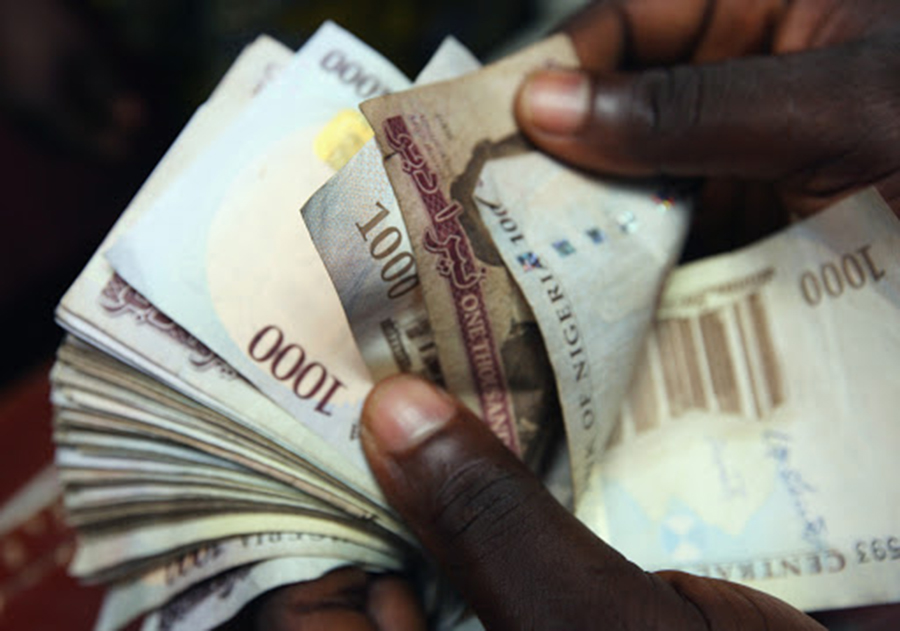
The International Monetary Fund (IMF) said that the Nigerian Government disagrees with its recommendations that it should further devalue the naira, which is over 18% overvalued so as to ease external imbalances.
This is also as the Bretton wood organization had recommended a gradual and multi-step approach to establish a unified and clear exchange rate regime with the near-term focus on allowing for greater flexibility and removing the payments backlog.
This disclosure is contained in the IMF’s Article 1V report for Nigeria which was published on Monday, February 8, 2021.
READ: FG needs fundamental policy reset to durably exit economic crises – IMF
Other News
According to a report by Bloomberg, the report says that President Muhammadu Buhari’s administration sees pressure in the foreign exchange market as due to global outflows caused by the coronavirus pandemic and believes another round of currency devaluation would add to double-digit inflation.
The government said that exchange rate stability has contributed significantly to price stability, a critical component and objective of macroeconomic policy. It said that a further devaluation of the naira could worsen economic situation including inflation.
The present administration has resisted increasing calls by some businesses and state governors who have been negatively impacted by an artificially overvalued naira to allow a flexible and liberalized exchange rate.
READ: Naira falls further at NAFEX as external reserves loses $323 million in 11 days
This also contradicts expectations from market operators and analysts, who have called for further devaluation of the local currency despite CBN’s downward adjustment of the exchange rate after a crash in global oil prices due to the coronavirus pandemic.
While calling for the unification of the various exchange rates and the removal of restrictions on access to dollars for the importation of some items, the IMF urged the Federal Government to do away with the premium paid in the black market and clear the backlog of dollar demand that has hurt policy credibility.
The IMF Mission Chief in Nigeria, Jesmin Rahman, at an interview before the release of the report said, ‘’The IMF’s recommendation is gradual but clear and multi-step exchange-rate reforms, so that everybody knows where Nigeria’s going, which is often more important than what you do in terms of devaluation.’’
READ: CBN and cryptocurrency ban
What you should know
- The IMF had always advocated for more transparency and flexibility in foreign exchange and had called on the Nigerian authorities to commence the process of the unification of the various exchange rates.
- The unification of the exchange rate is critical in the establishment of policy credibility, encourage more foreign capital inflow, reduce the high rate of CBN’s intervention in the forex market with negative impacts on the country’s external reserve and can lead to an appropriately valued exchange rate.
- It can be recalled that Nigeria, in 2020, devalued the official rate of the naira twice in the wake of the crash in oil prices (contributes about 90% of the country’s foreign exchange earnings).
 Follow Us on Google Discover
You did not offer a professional opinion. I’d like that too.
Personally, I feel if we always have to devalue our currency every time an external shock happens we might as well just stop having an exchange rate policy. These things will always happen and if leaders will think long term instead of continuous short term policies, we’d actually have a chance to grow.
Further devaluation can not be tolerated anymore. The inflation will be extremely harsh. Our Naira is so weak and it’s such a shame.
Devaluation of naira is one the thing that cause us the problem we are in today. Trace back to 1986 when Nigeria did the Structural Adjustment Program and the first devaluation of naira was done. The white men told our fathers that Nigeria should keep devaluing the naira for 30yrs till now we got to 1$ is now #500 and you still want us to devalue again. Are you insane?
You are right david,nairametric didnot offer the pro and con of devaluing the naira,naira have been or being devaluing for more than 35 yrs,my comment is, i thought nairametric will expand on the minister of finance comment,that the ministry of finance is having talks with the central bank on doing,some home grown forex bond,using,nigerian forex reserve in nigeria.
if they do that,there is no need to devalues the naira,as it is supply and demand,so they can uses this bond to supply forex to matches the naira.i think that this govt is under duress by some past nigerian leader, to do this supply and demand toreactifies the mistake of SAP
In my opinion, a devaluation by 10-12% would help make the FX available to local manufacturers for importation of raw materials, machinery and equipment. I do not think this would increase inflation since most businesses in the country are already sourcing their FX from the parallel market for obvious reasons.Perhaps this is already reflecting in retail prices, hence the high inflation rate.
Warning: Undefined variable $post_id in /var/www/nairametrics/wp-content/themes/nairametrics/comments.php on line 134
Warning: Undefined variable $post_id in /var/www/nairametrics/wp-content/themes/nairametrics/comments.php on line 134