
 Follow Us on Google Discover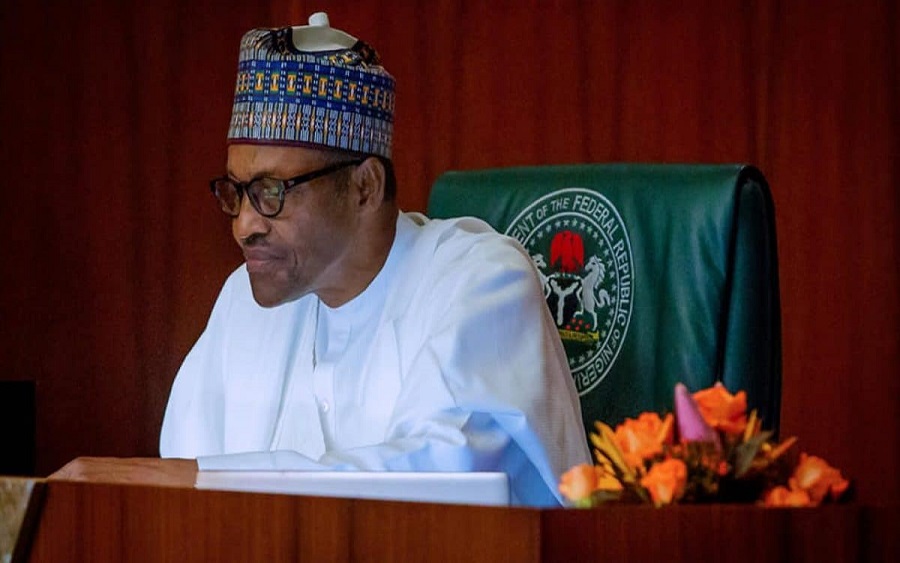
Deprecated: mb_convert_encoding(): Handling HTML entities via mbstring is deprecated; use htmlspecialchars, htmlentities, or mb_encode_numericentity/mb_decode_numericentity instead in /var/www/nairametrics/wp-content/themes/nairametrics/functions.php on line 104
Analysts at FSDH Merchant Bank Limited believe that the Federal Government’s revenue targets for 2020 are unsustainable. In an 8-page report titled, “The Proposed 2020 Budget and the Economy”, the analysts opined that the Federal Government’s “unrealistic revenue targets” and increasing reliance on “Central Bank financing” to make up for fiscal deficit in the 2020 budget is “unsustainable”.
President Muhammadu Buhari recently presented the proposed N10.3 trillion 2020 national budget before a joint session of the National Assembly. Nairametrics reported that the budget came with a revenue generation estimate of N8.155 trillion, said money which is expected to come from Oil (N2.64 trillion), Non-oil (N1.81 trillion), and others (N3.7 trillion). A deficit of N1.7 trillion is also expected to be covered through loans.
FSDH Analysts commended the early presentation of the proposed budget. They also believe that if the budget is implemented early, it could positively impact on the economy. However, they noted that the 2020 budget is “ambitious” while stressing their concern over the revenue targets that have been set by the government.
[gview file=”https://cdn.nairametrics.com/wp-content/uploads/2019/10/Proposed-2020-Budget-and-the-Economy.pdf”]
Other News
[READ MORE: Expert says Federal Government can make $280 billion from iron ore every year (Opens in a new browser tab)]
“Early presentation of the 2020 budget is a welcome development. If the budget is approved before the budget year begins, this could result in improved budget performance, particularly capital budget execution.
“The proposed 2020 budget is largely ambitious both in terms of spending plans and projected revenue. One major concern is meeting revenue targets to fund the budget. Oil only accounts for 32% of total budgeted revenue in 2020, suggesting that more pressures will be exerted on major non-oil revenue-generating areas.
“To meet revenue projections, the federal government will implement an increase in VAT and other forms of taxes which could trigger inflation and reduce purchasing power of consumers.”
[READ ALSO: 2020 Budget: Presidency to upgrade presidential fleet with N1.5 billion]
To this end, therefore, the Analysts advised the Federal Government to carefully implement some of these revenue targets in a way that will not cause unnecessary pressure on Nigerian businesses and consumers. They also made the following important observations:
- Nigeria’s economic recovery is slow but steady.
- Inflation is falling but external buffers are declining in the face of increased portfolio outflows.
- Nigeria’s fiscal authorities should build fiscal buffers to avert macroeconomic downturn should oil prices decline.
[READ MORE: Budget 2020: Oil workers to earn N75 billion]
- Coordinated fiscal and monetary policies are urgently required that focus on fiscal consolidation and tighter monetary policy.
To download the report, click here.
 Follow Us on Google Discover

Warning: Undefined variable $post_id in /var/www/nairametrics/wp-content/themes/nairametrics/comments.php on line 134
Warning: Undefined variable $post_id in /var/www/nairametrics/wp-content/themes/nairametrics/comments.php on line 134