
 Follow Us on Google Discover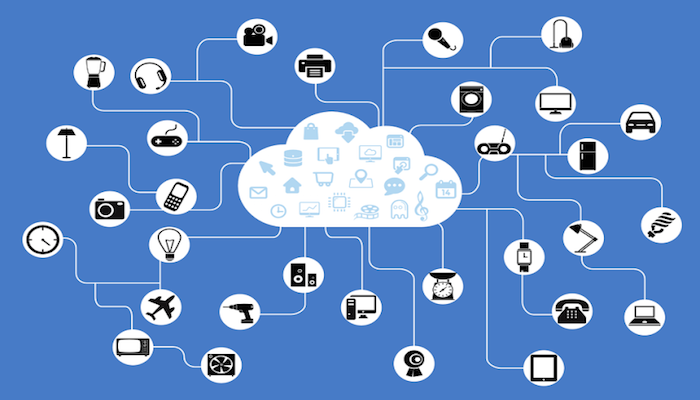
The 21st Century is currently driven by technological tools that have defined the way we all interact, solve problems and live our lives. For small businesses, starting out early to understand and utilize modern technology can help create an edge that will always keep you ahead of the competition.
Consulting Power House, PWC, put together these 8 technologies that they believe currently matter. Like it or not, these are the modern technologies that will shape the way we work.
- Artificial intelligence (AI): Software algorithms that are capable of performing tasks that normally require human intelligence, such as visual perception, speech recognition, decision-making, and language translation. AI is an “umbrella” concept that is made up of numerous sub-fields such as machine learning, which focuses on the development of programs that can teach themselves to learn, understand, reason, plan, and act (i.e., become more “intelligent”) when exposed to new data in the right quantities.
- Augmented reality (AR): This involves the addition of information or visuals to the physical world, via a graphics and/or audio overlay, to improve the user experience for a task or a product. This “augmentation” of the real world is achieved via supplemental devices that render and display said information. AR is distinct from Virtual Reality (VR), the latter being designed and used to re-create reality within a confined experience.
- Blockchain: Distributed electronic ledger that uses software algorithms to record and confirm transactions with reliability and anonymity. The record of events is shared between many parties and information once entered, cannot be altered, as the downstream chain reinforces upstream transactions.
- Drones: Air or water-based devices and vehicles, for example Unmanned Aerial Vehicles (UAV), that fly or move without an on-board human pilot. Drones can operate autonomously (via on-board computers) on a predefined flight plan or be controlled remotely. (Note: This category is distinct from autonomous land-based vehicles.)
- Internet of Things (IoT): Network of objects — devices, vehicles, etc. — embedded with sensors, software, network connectivity, and compute capability, that can collect and exchange data over the Internet. IoT enables devices to be connected and remotely monitored or controlled. The term IoT has come to represent any device that is now “connected” and accessible via a network connection. The Industrial IoT (IIoT) is a subset of IoT and refers to its use in manufacturing and industrial sectors.
- Robots: Electro-mechanical machines or virtual agents that automate, augment or assist human activities, autonomously or according to set instructions — often a computer program. (Note: Drones are also robots, but we list them as a separate technology.)
- Virtual reality (VR): Computer-generated simulation of a three-dimensional image or a complete environment, within a defined and contained space (unlike AR), that viewers can interact with in realistic ways. VR is intended to be an immersive experience and typically requires equipment, most commonly a helmet/headset.
- 3D printing: Additive manufacturing techniques used to create three-dimensional objects based on digital models by layering or “printing” successive layers of materials. 3D printing relies on innovative “inks” including plastic, metal, and more recently, glass and wood.
Source: PWC
 Follow Us on Google Discover


Access Control
Alarm Systems
Anti Terror Equipments
Arm Barrier
Arm Barriers
Automated Entrance Systems
Automated Gates
Automated Security Bollards
Automated Slide And Swing Doors/Gates
Automated Swing Doors
Ballistic Protective Wear
Bank Security
Bomb Jammers
Bomb Sweeps/Jammers/Detection
Bug Sweep/Detection
CCTV Surveillance Cameras
Electric Fencing
Emergency Control Rooms
Emergency/Security Control Rooms
Intercom/Video Conferencing
Mail Bomb Scanners
Panic Rooms (Safe Rooms)
Perimeter Fencing & Fibre Optics
Portable Explosive Scanner
Portable Parcel Scanners
Revolving Doors
Roller Shutters
Security Cameras
Security Consultancy
Sliding Doors
Tripod Turnstile
Turnstiles
Vapour/ Trace Detection
Walk Through Metal Detectors
Warning: Undefined variable $post_id in /var/www/nairametrics/wp-content/themes/nairametrics/comments.php on line 134
Warning: Undefined variable $post_id in /var/www/nairametrics/wp-content/themes/nairametrics/comments.php on line 134